maré estúdio
maré estúdio
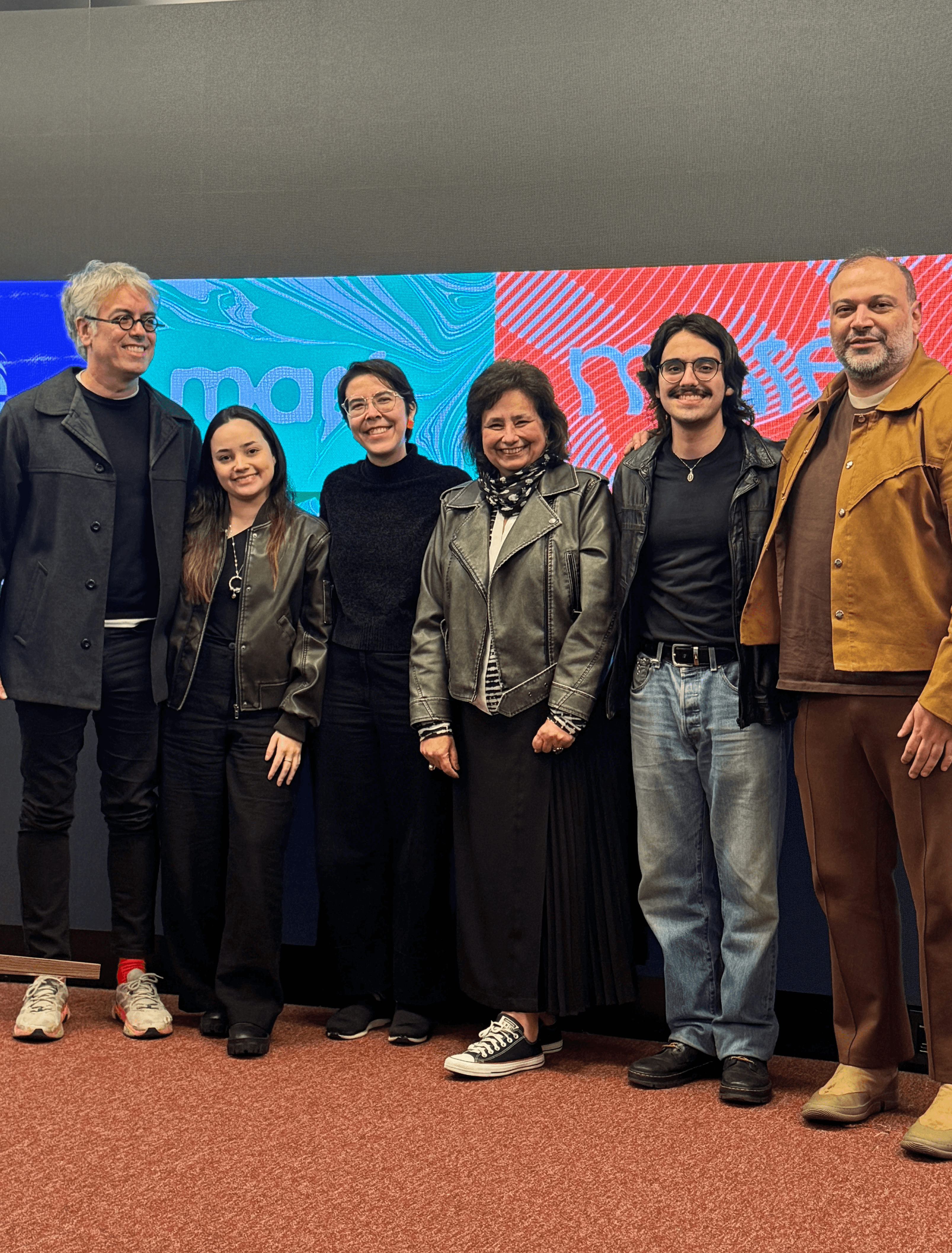
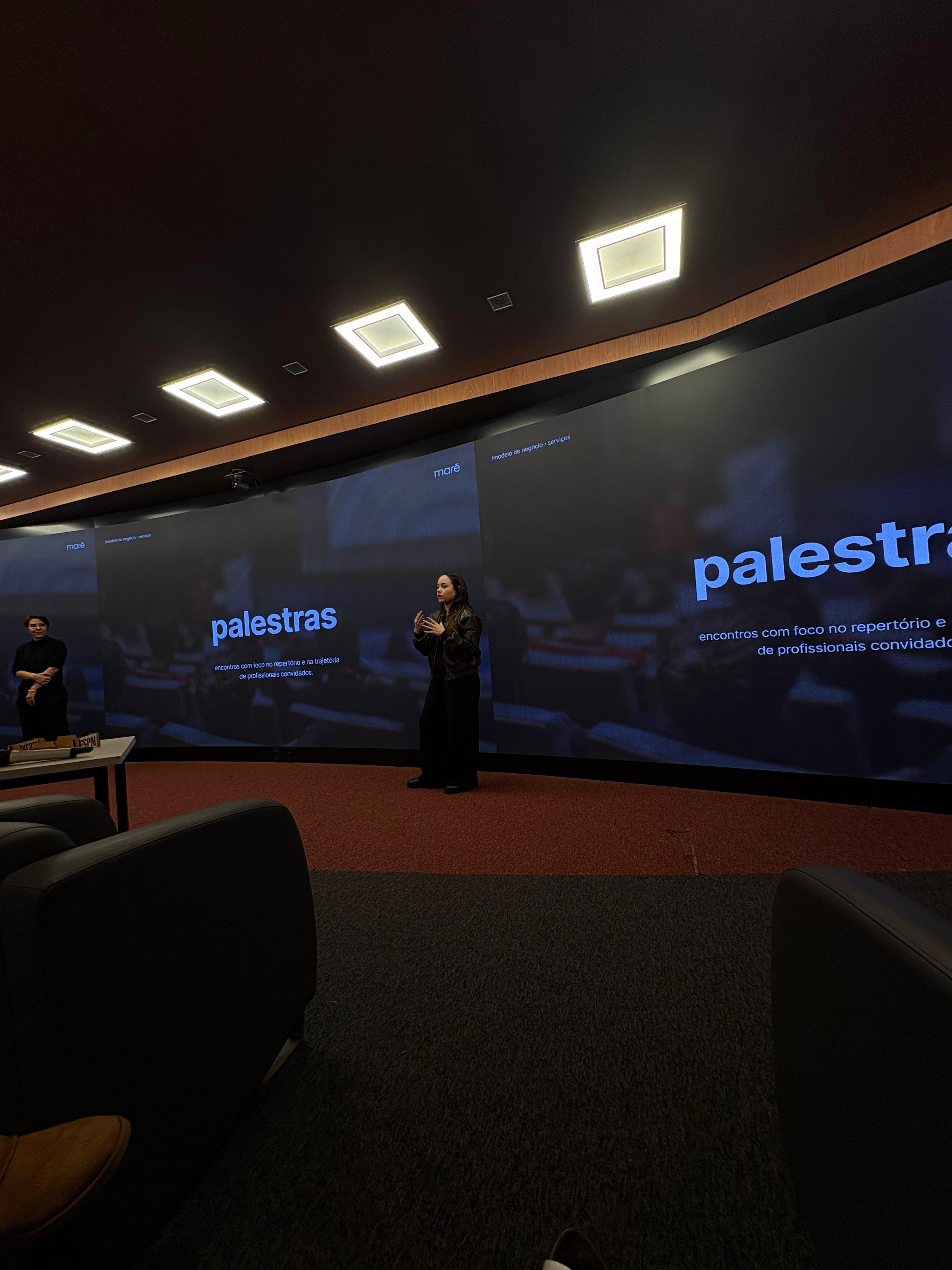
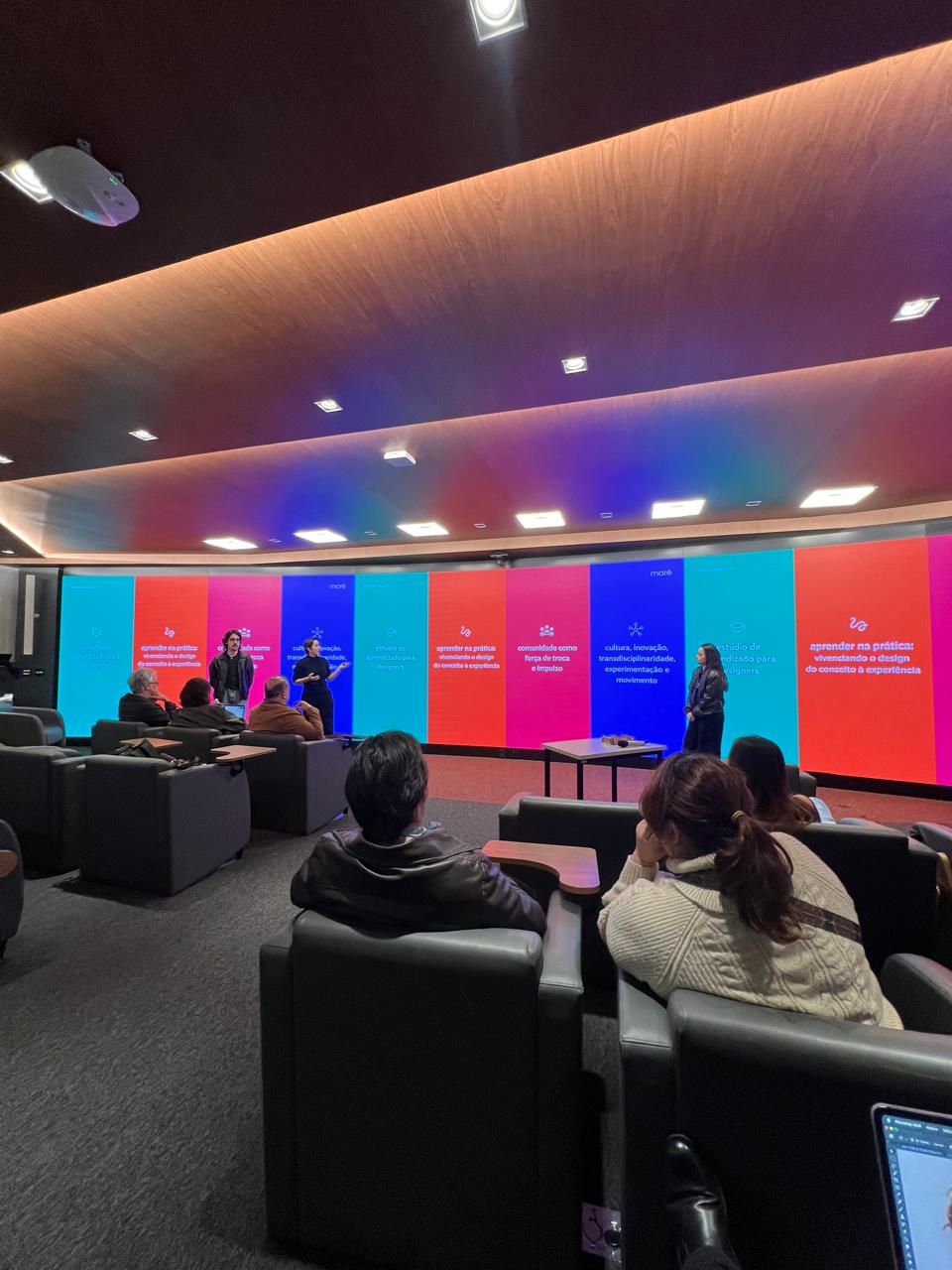
maré is a design learning studio and community created as my graduation project (final thesis) at espm são paulo, developed under the entrepreneurship track. built over 18 months of research and prototyping, it proposes a hybrid ecosystem (digital + physical) organized into themed learning cycles that connect students, professionals, and institutions through collective practice, editorial tools, and market-connected experiences.
maré is a design learning studio and community created as my graduation project (final thesis) at espm são paulo, developed under the entrepreneurship track. built over 18 months of research and prototyping, it proposes a hybrid ecosystem (digital + physical) organized into themed learning cycles that connect students, professionals, and institutions through collective practice, editorial tools, and market-connected experiences.
year
2024–2025
2024–2025
duration
18 months
18 months
my role
co-creation across strategy, business model, program design, and brand system
co-creation across strategy, business model, program design, and brand system
team
Fernanda Kuntz, Naiara Terra & Tiago Perotti
Fernanda Kuntz, Naiara Terra & Tiago Perotti
01
/challenge
challenge
challenge
design education in brazil is still largely structured around fragmented, classroom-centered models that struggle to keep pace with a vuca reality. students frequently face discontinuity between theory and practice, limited access to mentorship and community, and few bridges to market experience while still learning. the challenge of the project was to design a viable alternative from scratch: a learning venture capable of expanding education beyond the university, creating continuity over time, and turning learning into a collective practice rooted in brazilian cultural context.
design education in brazil is still largely structured around fragmented, classroom-centered models that struggle to keep pace with a vuca reality. students frequently face discontinuity between theory and practice, limited access to mentorship and community, and few bridges to market experience while still learning. the challenge of the project was to design a viable alternative from scratch: a learning venture capable of expanding education beyond the university, creating continuity over time, and turning learning into a collective practice rooted in brazilian cultural context.
outcome
outcome
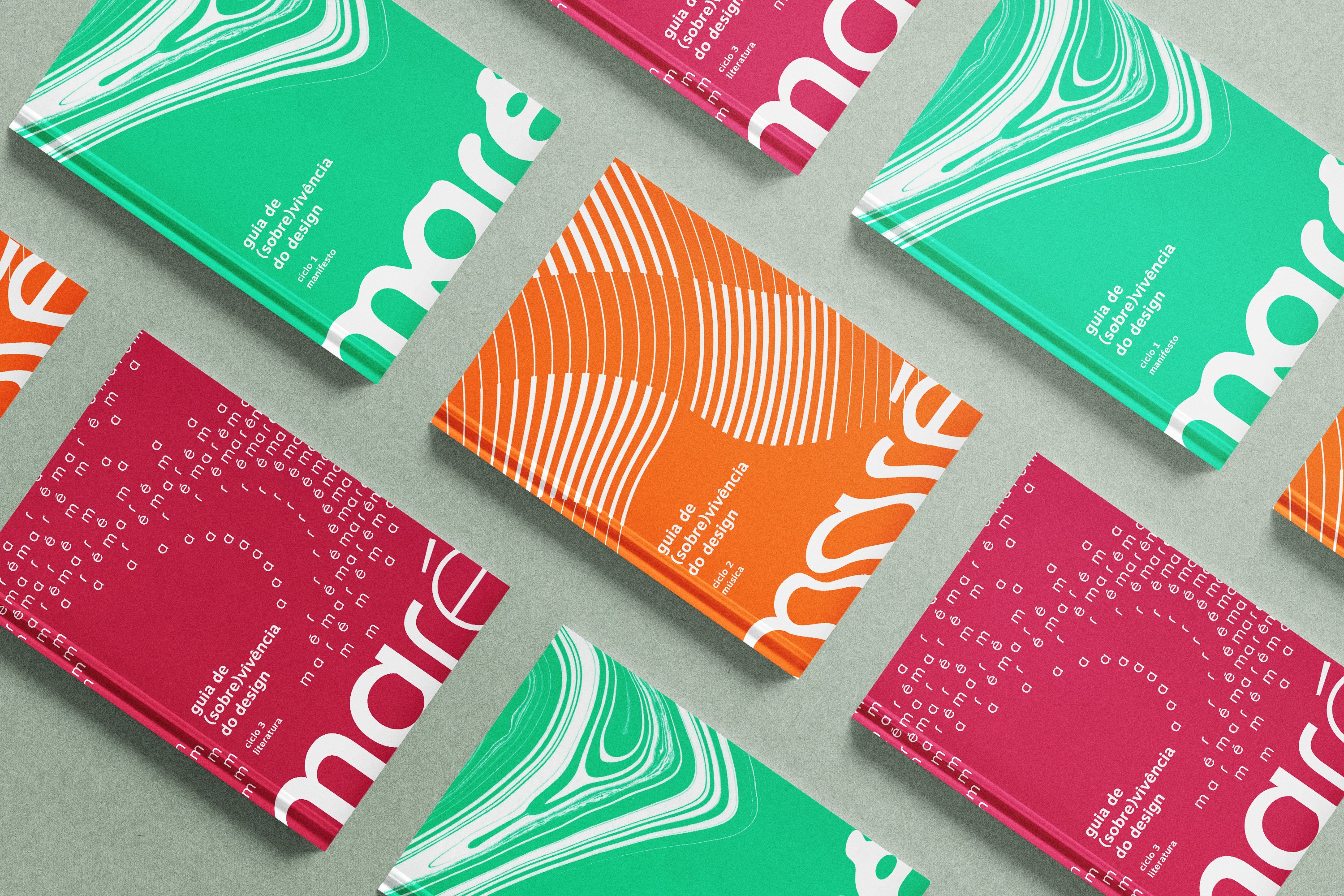
maré estúdio was defined as a design learning studio that operates through recurring thematic cycles. each cycle combines community-led learning, practical experimentation, and editorial tools, delivered through a hybrid structure (digital platform + physical experiences). in parallel, we designed a brand system with fixed foundations and variable cycle identities, allowing the studio to remain coherent while constantly changing — matching the project’s core idea: learning as movement, not a static curriculum.
maré estúdio was defined as a design learning studio that operates through recurring thematic cycles. each cycle combines community-led learning, practical experimentation, and editorial tools, delivered through a hybrid structure (digital platform + physical experiences). in parallel, we designed a brand system with fixed foundations and variable cycle identities, allowing the studio to remain coherent while constantly changing — matching the project’s core idea: learning as movement, not a static curriculum.
02
/approach
approach
approach
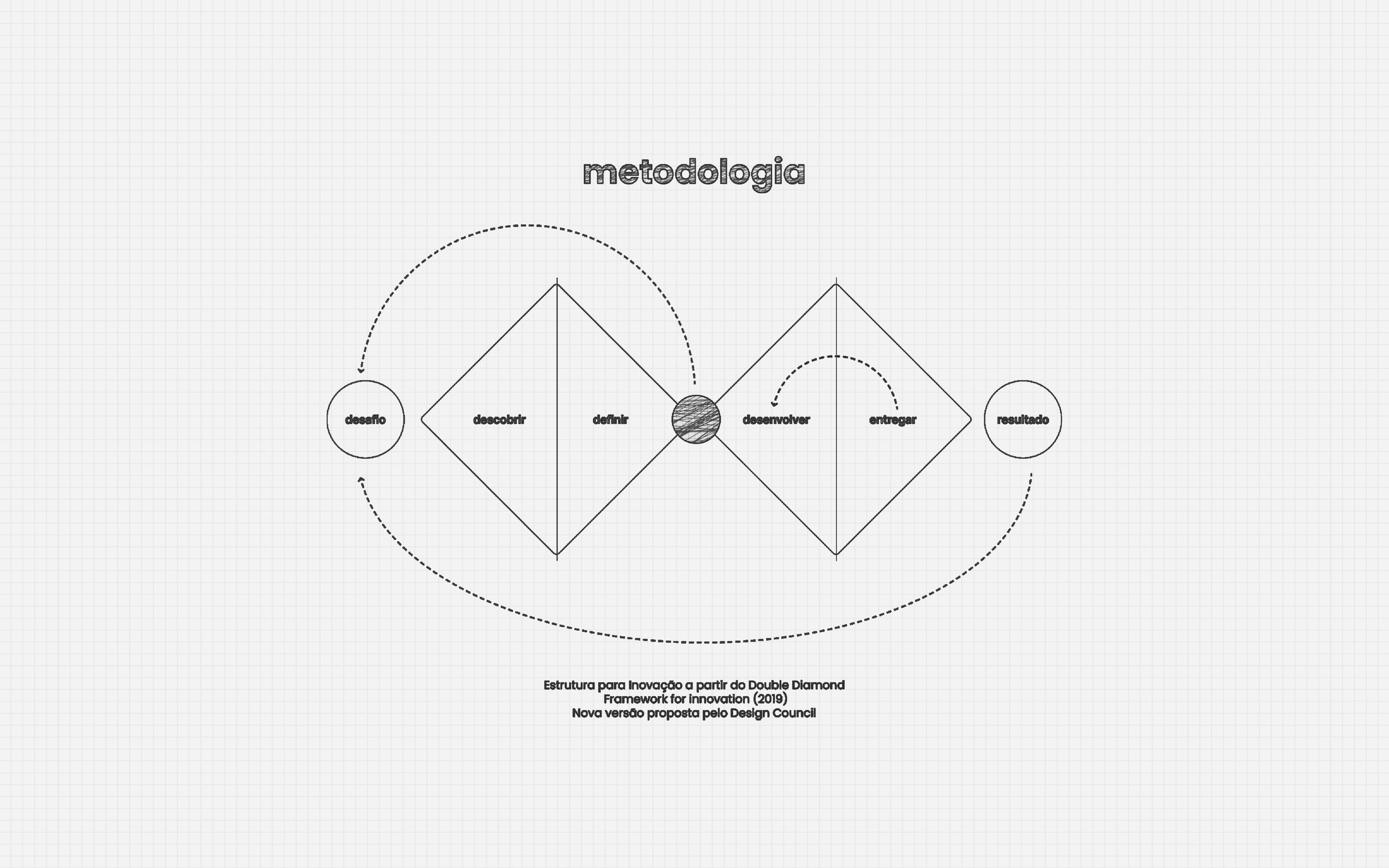
we used the double diamond as a framework for innovation to structure maré estúdio from exploration to implementation, adapting the Design Council model to a graduation venture context. starting from the challenge, we expanded in discover through field research and ecosystem analysis to understand gaps in brazilian design education; then converged in define by synthesizing insights into a clear problem framing, value proposition, and strategic principles that would guide the studio. from there, we expanded again in develop by designing and testing multiple possibilities for the business and program model — including cycle logic, ecosystem architecture, and offers — and finally converged in deliver by translating the chosen system into concrete prototypes, communication touchpoints, and a flexible identity system that could evolve across cycles.
throughout the process, the double diamond worked less as a linear checklist and more as a decision engine: each phase ended with a tangible output that reduced uncertainty and increased viability. research was not treated as documentation, but as the basis for strategic choices; system design was not treated as a concept, but as an operating model with repeatable cadence; and prototyping served to make the ecosystem legible, scalable, and implementable. in this way, the methodology ensured the project stayed grounded in real constraints while still allowing experimentation, iteration, and expansion across the four cycle identities.
we used the double diamond as a framework for innovation to structure maré estúdio from exploration to implementation, adapting the Design Council model to a graduation venture context. starting from the challenge, we expanded in discover through field research and ecosystem analysis to understand gaps in brazilian design education; then converged in define by synthesizing insights into a clear problem framing, value proposition, and strategic principles that would guide the studio. from there, we expanded again in develop by designing and testing multiple possibilities for the business and program model — including cycle logic, ecosystem architecture, and offers — and finally converged in deliver by translating the chosen system into concrete prototypes, communication touchpoints, and a flexible identity system that could evolve across cycles.
throughout the process, the double diamond worked less as a linear checklist and more as a decision engine: each phase ended with a tangible output that reduced uncertainty and increased viability. research was not treated as documentation, but as the basis for strategic choices; system design was not treated as a concept, but as an operating model with repeatable cadence; and prototyping served to make the ecosystem legible, scalable, and implementable. in this way, the methodology ensured the project stayed grounded in real constraints while still allowing experimentation, iteration, and expansion across the four cycle identities.
03
/brand & identity
brand & identity
brand & identity
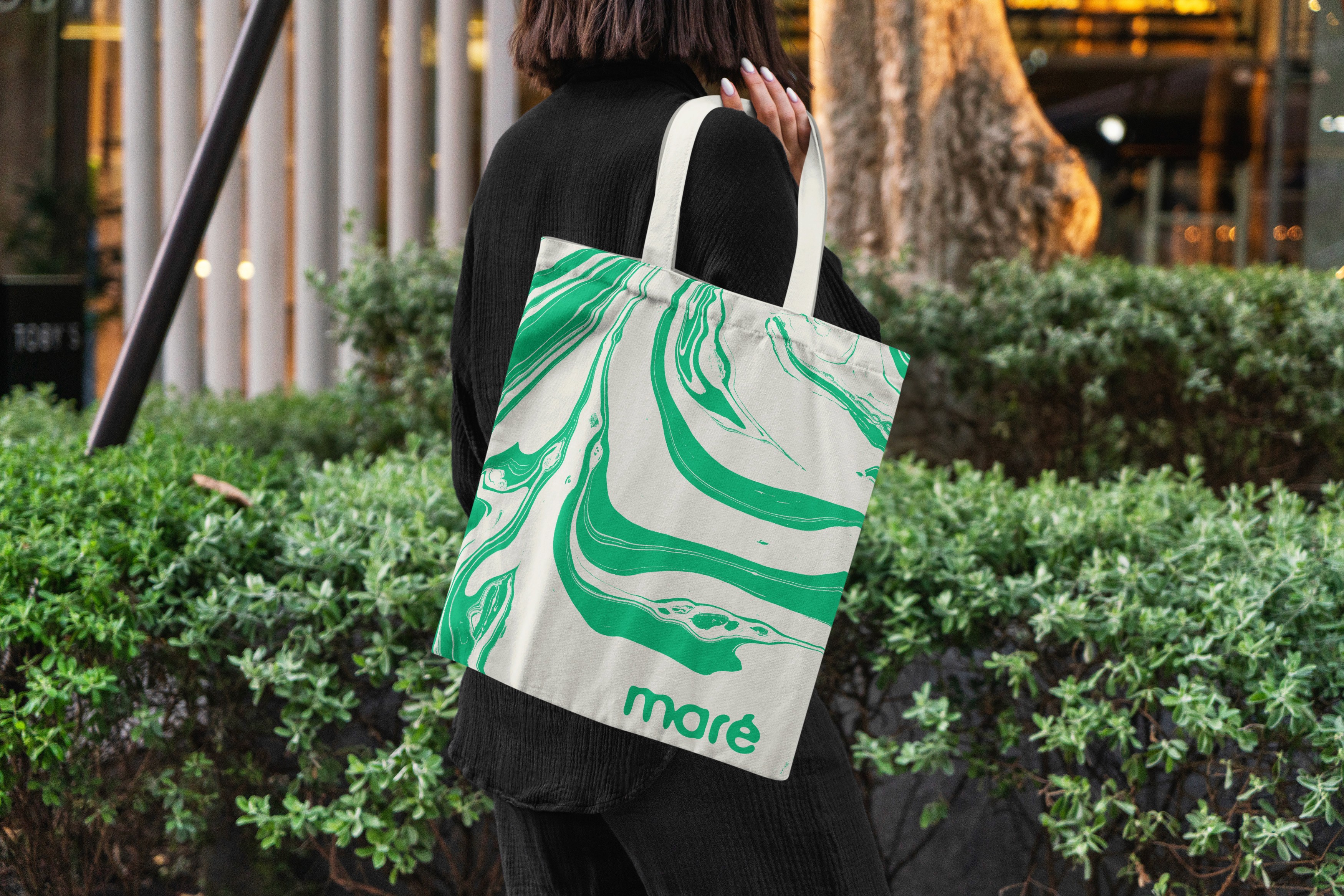
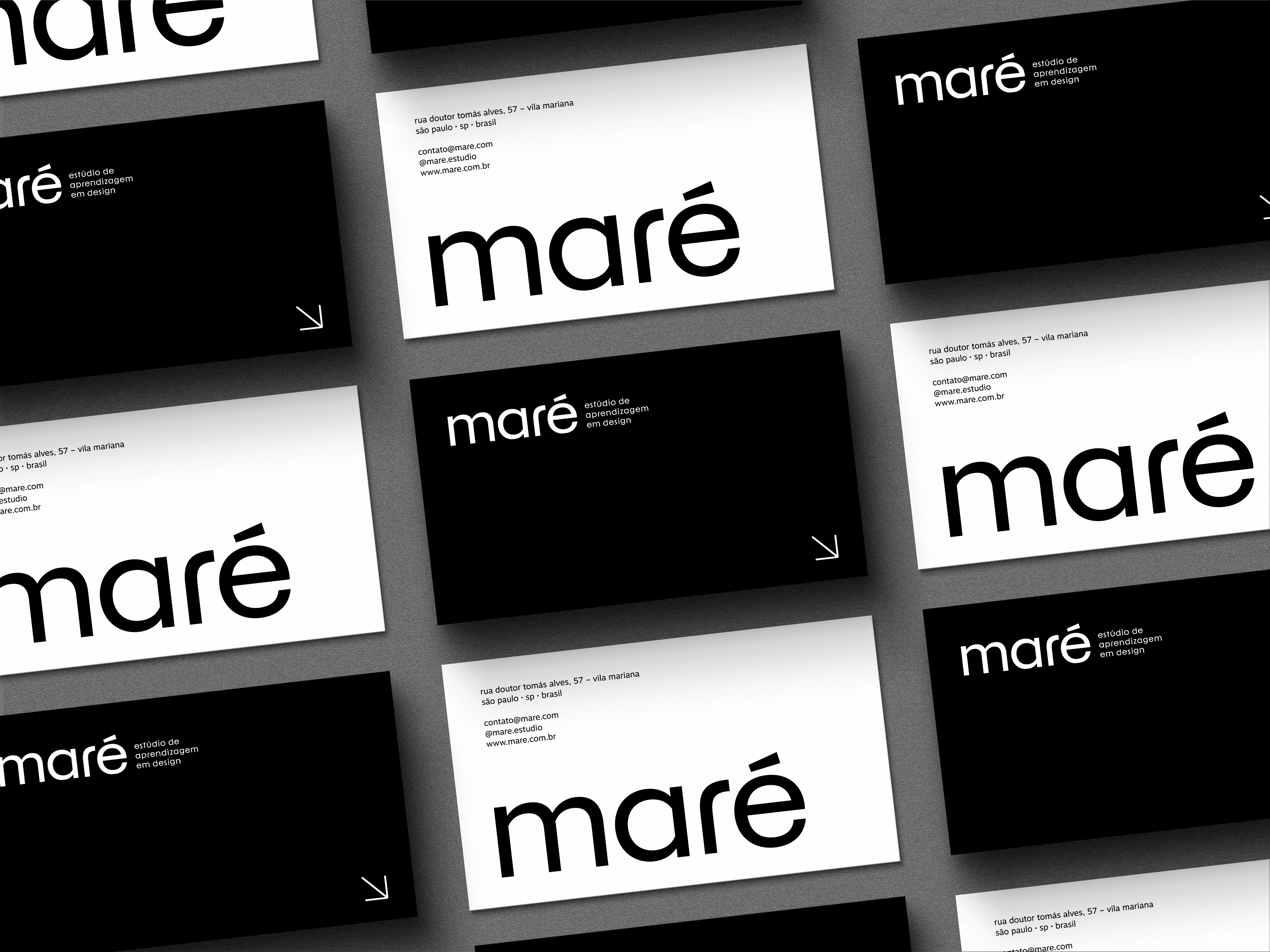
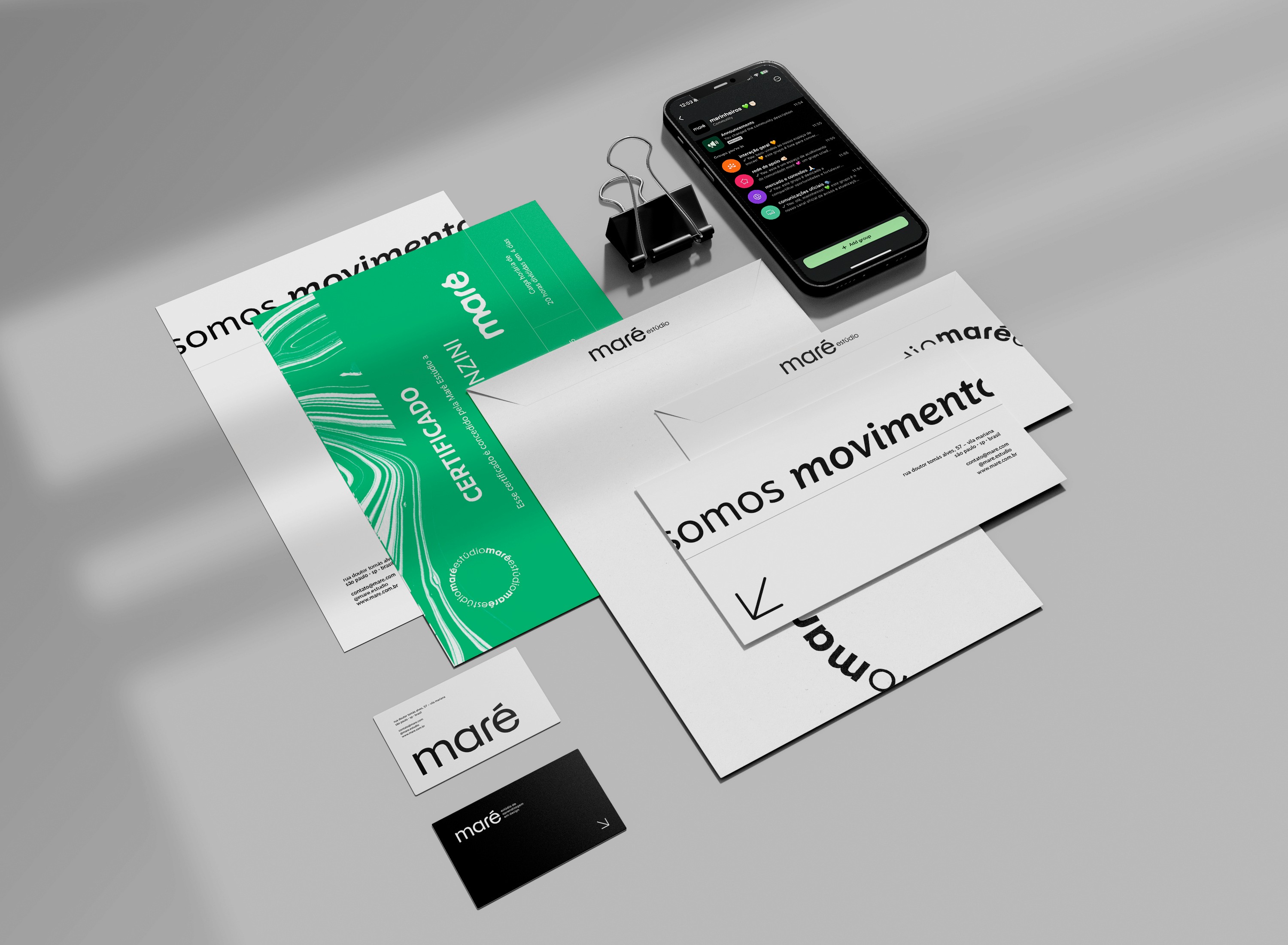
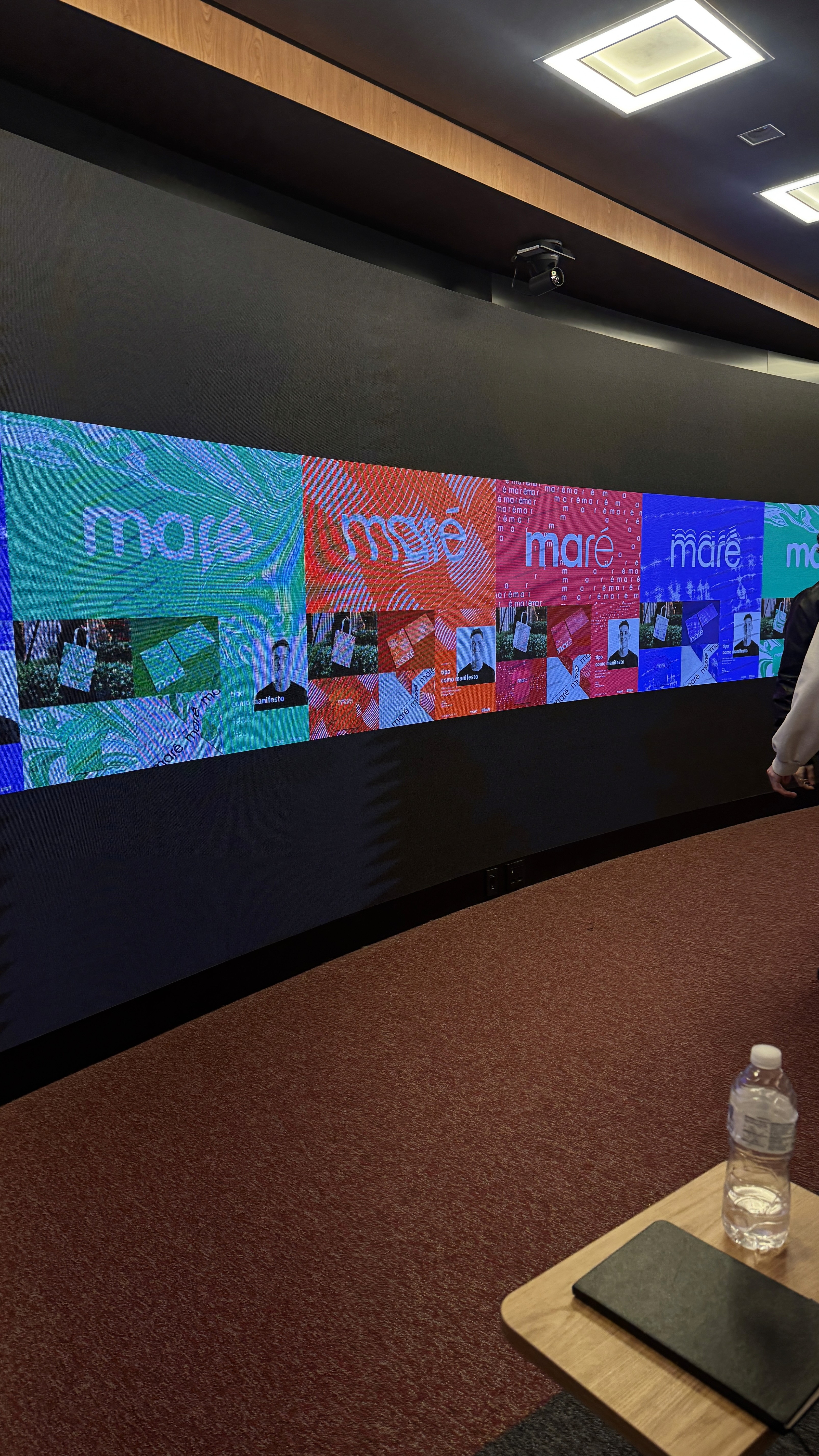
the brand strategy positions maré estúdio as a collective movement that transforms the feeling of “drifting” into agency: learning is not passive consumption, but shared practice in constant motion. the identity system mirrors this logic through a stable base and a variable layer. the institutional system anchors recognition through consistent typography, grid discipline, and a core signature, while each cycle introduces a distinct visual language through color, textures, and logo mutations. the result is a brand that stays coherent while remaining alive — designed to evolve with each learning cycle without losing legibility, hierarchy, or recognition.
the brand strategy positions maré estúdio as a collective movement that transforms the feeling of “drifting” into agency: learning is not passive consumption, but shared practice in constant motion. the identity system mirrors this logic through a stable base and a variable layer. the institutional system anchors recognition through consistent typography, grid discipline, and a core signature, while each cycle introduces a distinct visual language through color, textures, and logo mutations. the result is a brand that stays coherent while remaining alive — designed to evolve with each learning cycle without losing legibility, hierarchy, or recognition.
cycles maré
cycles maré
in maré estúdio, cycles are the studio’s core operating unit: a recurring structure that turns learning into rhythm, continuity, and collective momentum rather than isolated experiences. each cycle is built around a cultural theme that works as both curriculum lens and creative constraint, guiding the selection of talks, workshops, labs, and editorial outputs. this format makes the ecosystem scalable and repeatable while staying open to change: the program evolves cycle by cycle, the community renews itself through shared focus, and the brand system adapts visually to reflect each cycle’s theme without losing its institutional coherence.
in maré estúdio, cycles are the studio’s core operating unit: a recurring structure that turns learning into rhythm, continuity, and collective momentum rather than isolated experiences. each cycle is built around a cultural theme that works as both curriculum lens and creative constraint, guiding the selection of talks, workshops, labs, and editorial outputs. this format makes the ecosystem scalable and repeatable while staying open to change: the program evolves cycle by cycle, the community renews itself through shared focus, and the brand system adapts visually to reflect each cycle’s theme without losing its institutional coherence.
cycle 1 — manifest
cycle 1 — manifest

cycle 2 — music
cycle 2 — music

cycle 3 — literature
cycle 3 — literature
cycle 4 — fashion
cycle 4 — fashion
cycle 1 — manifest
cycle 1 — manifest
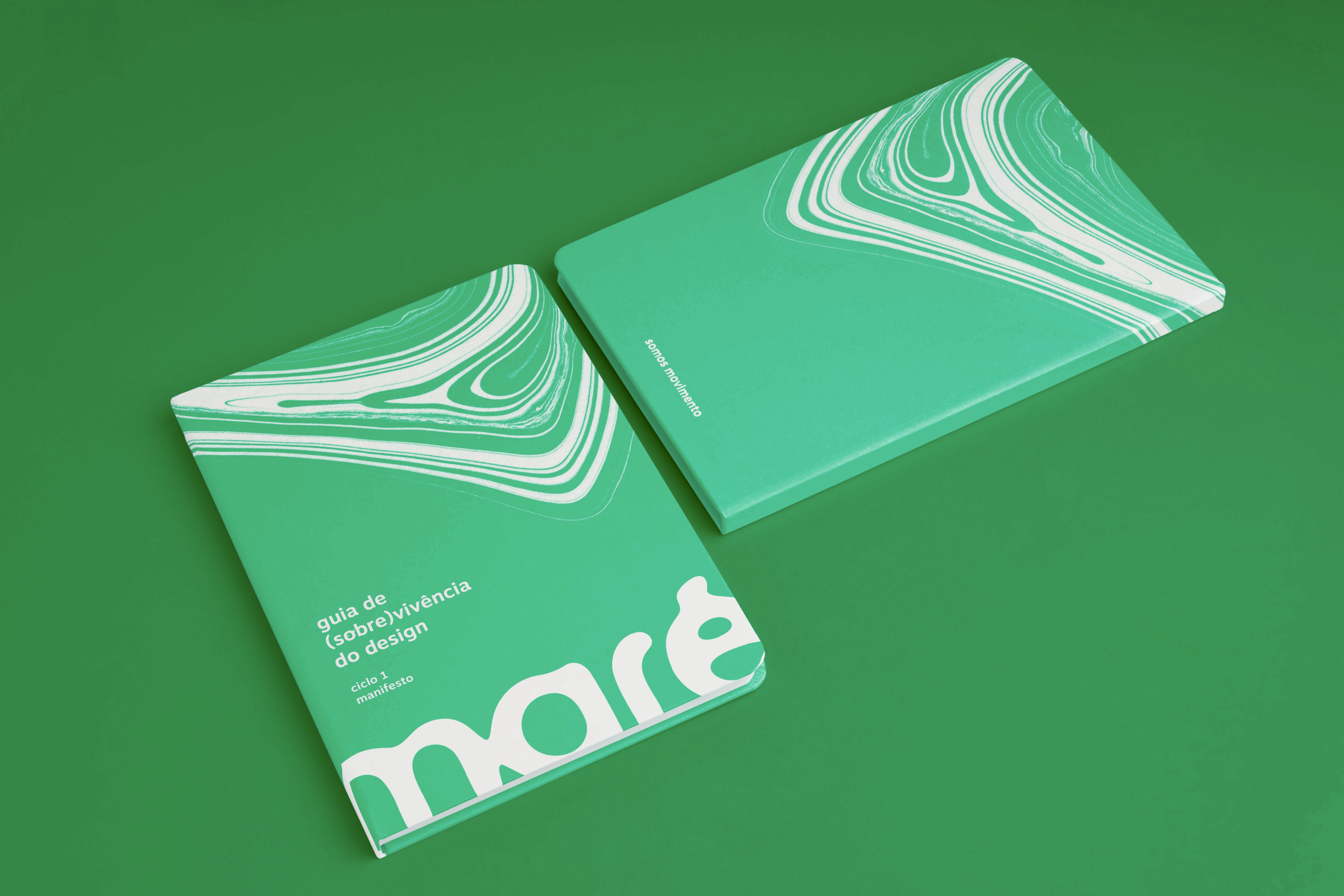
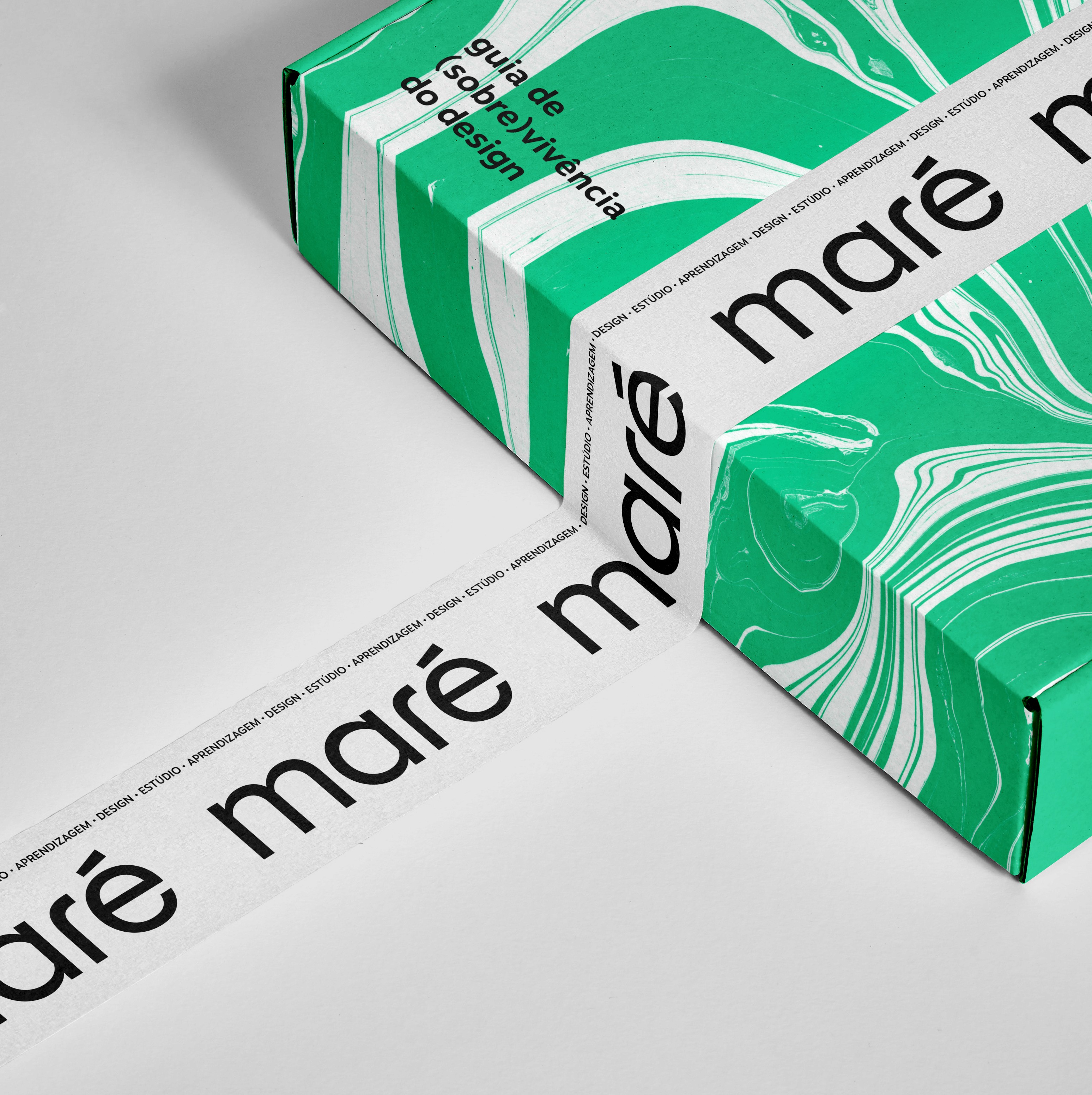
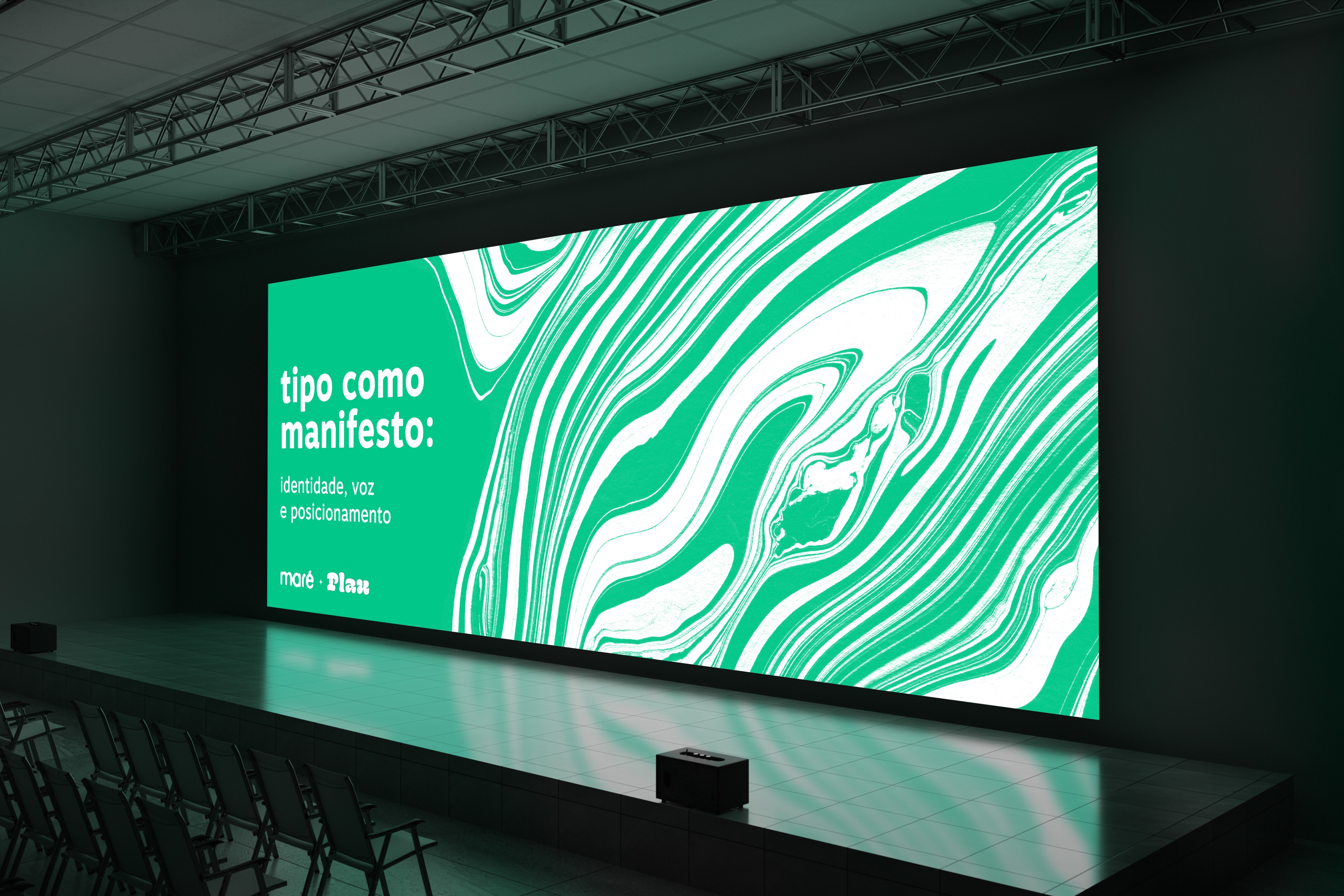
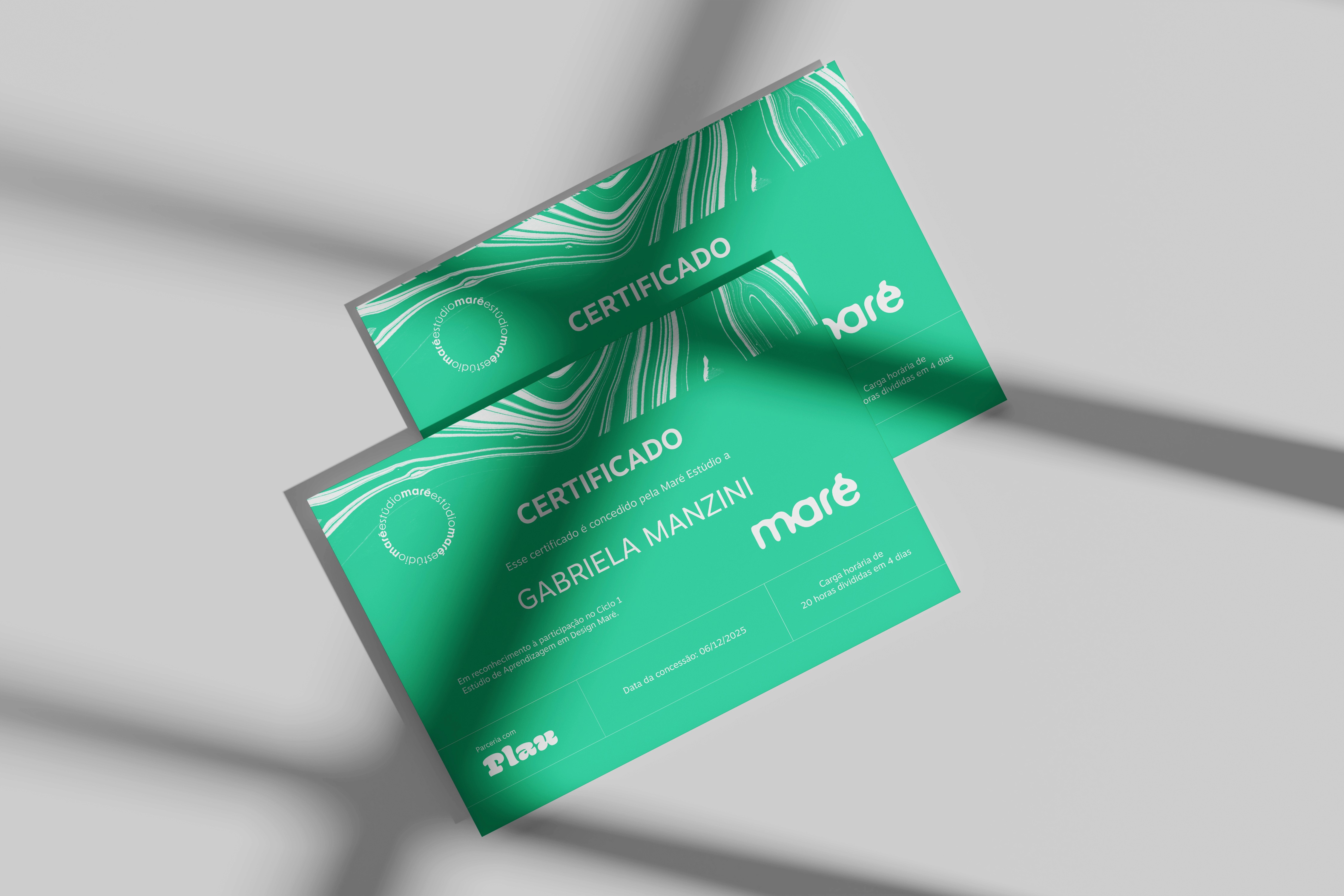
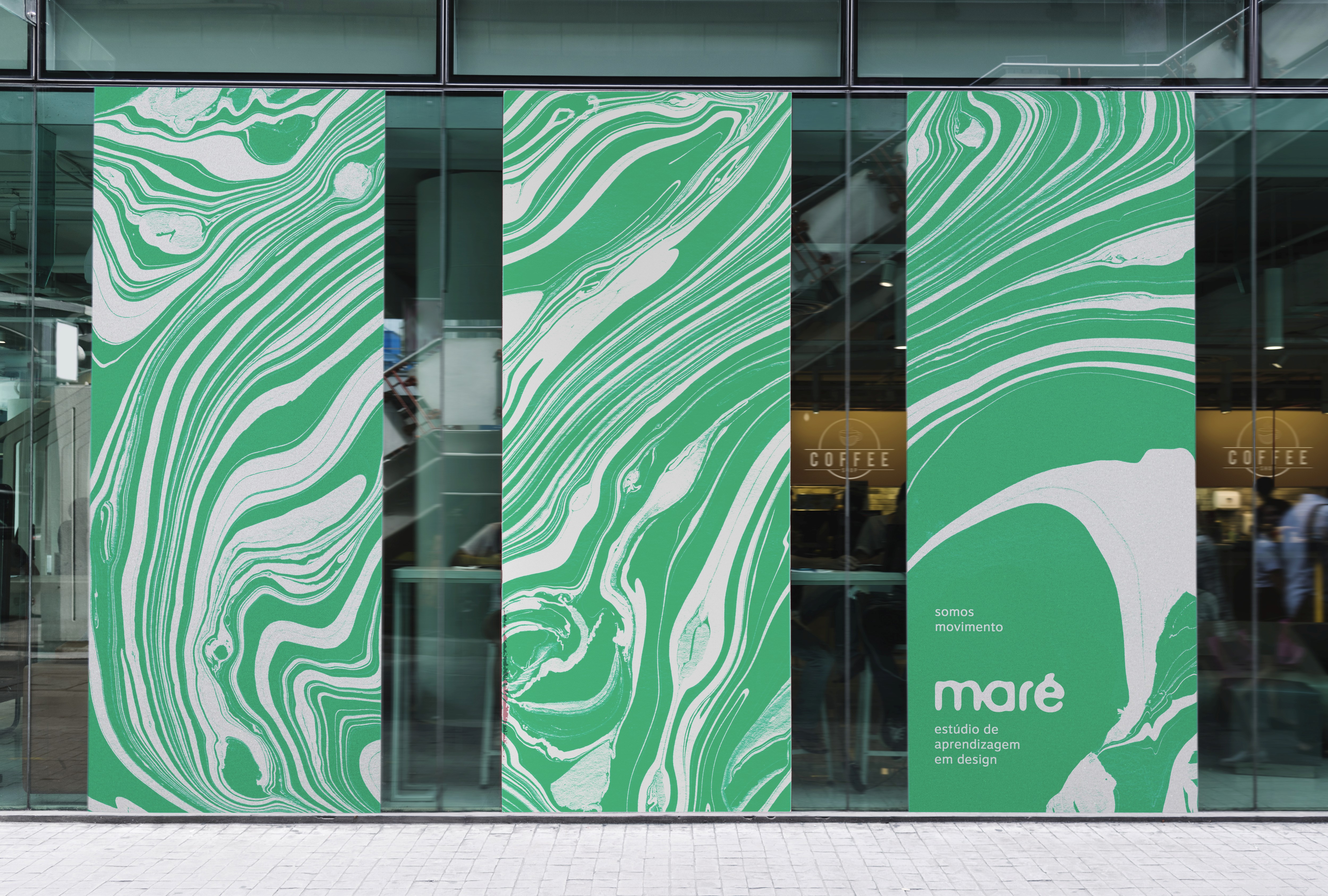
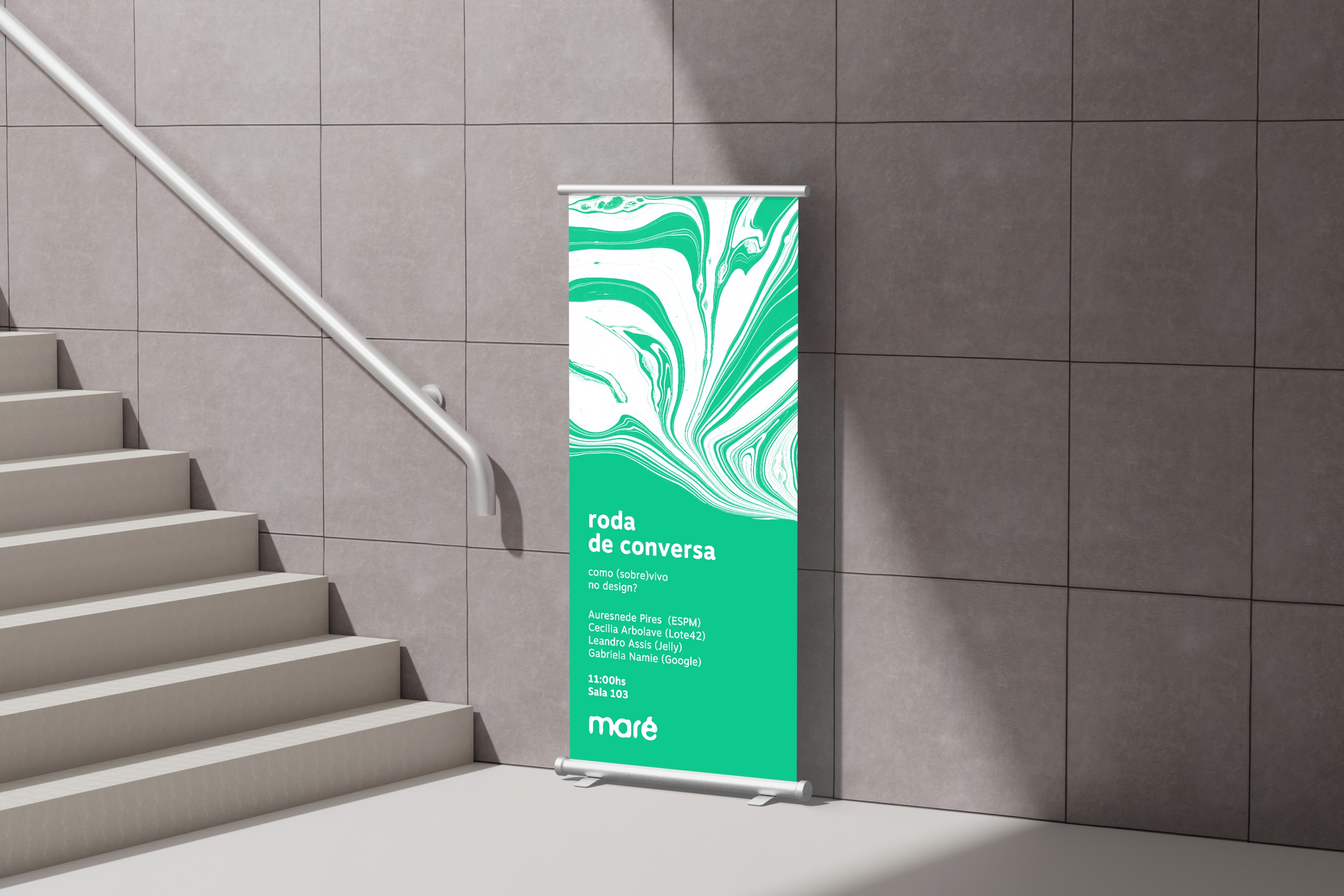
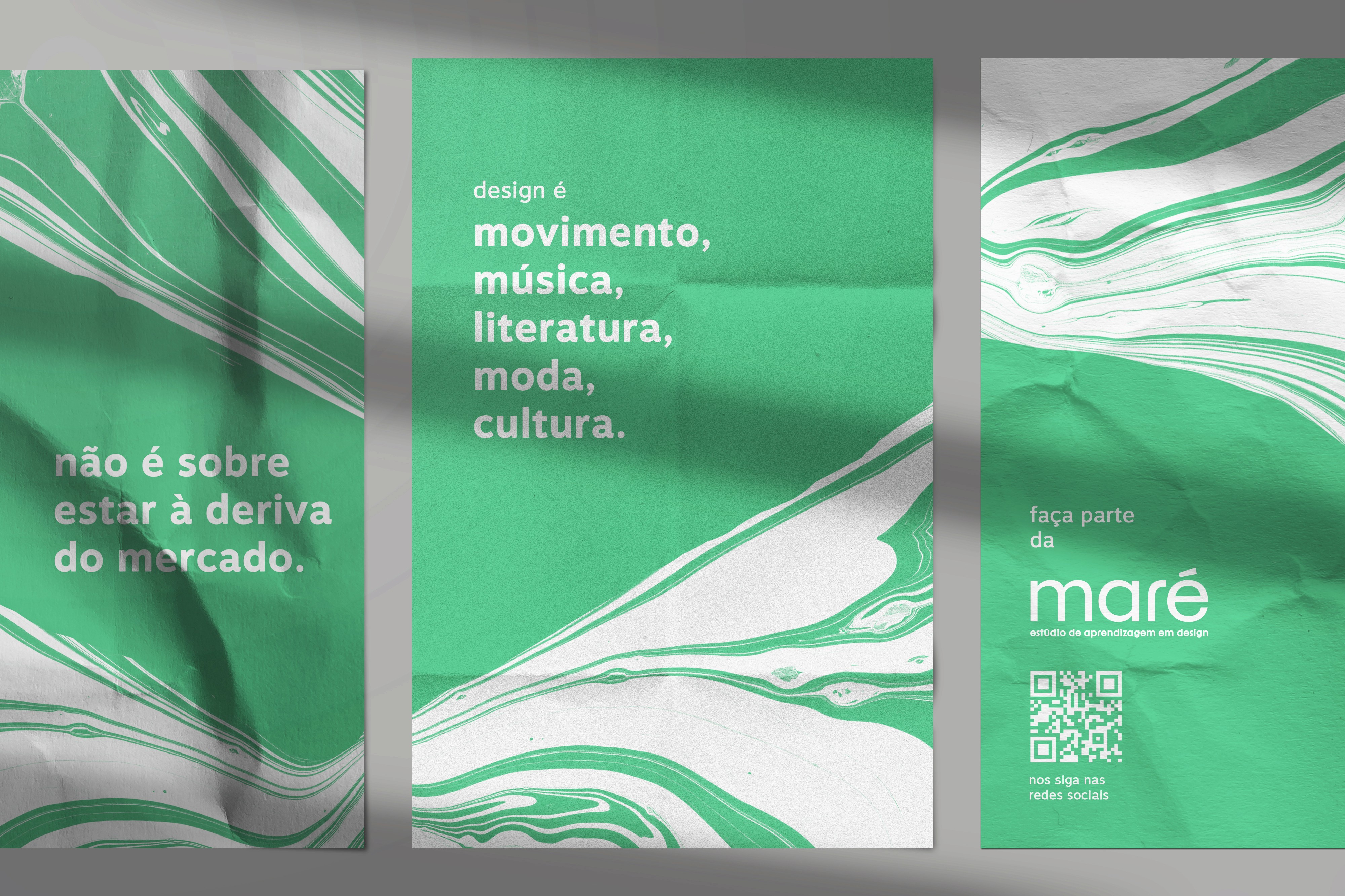
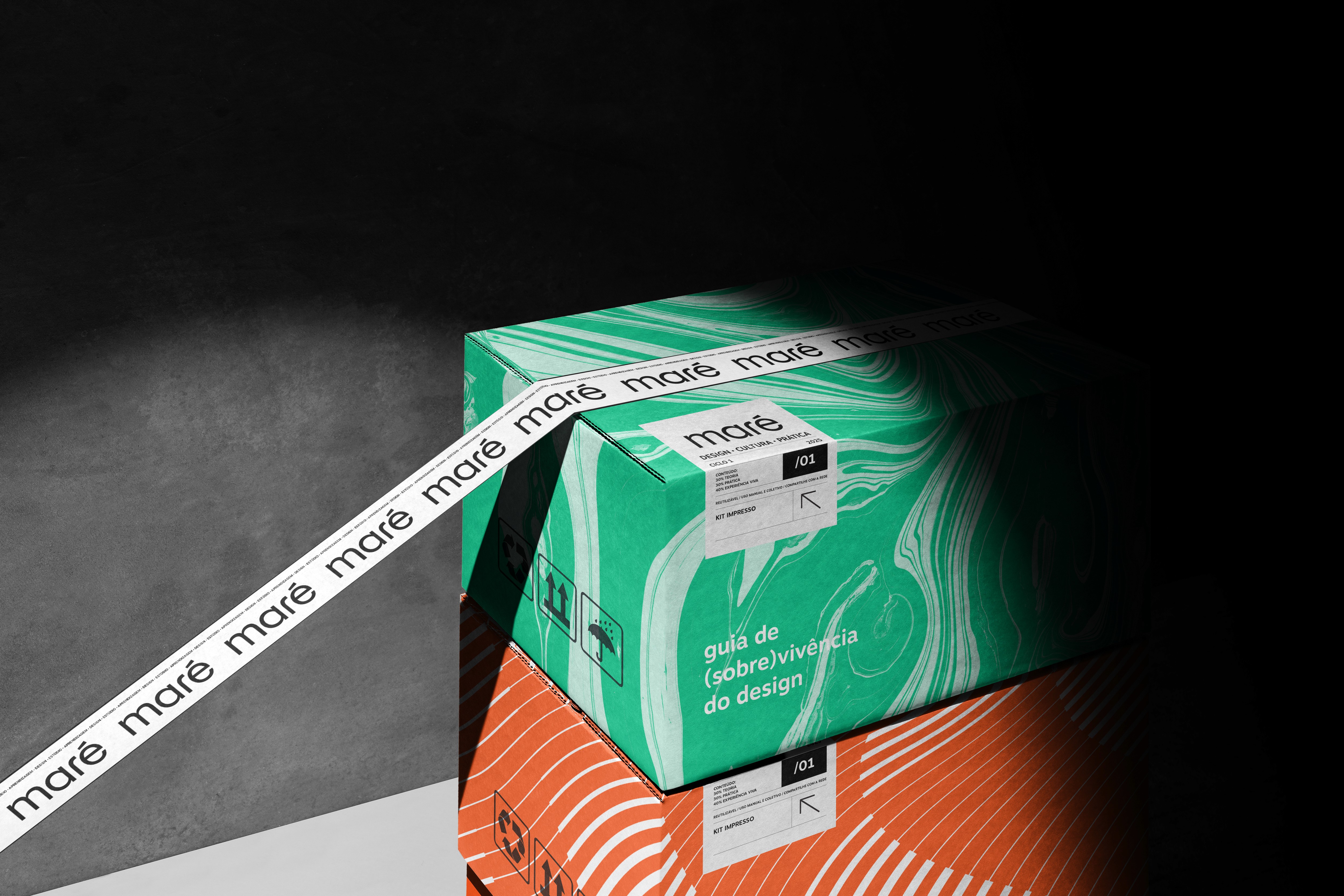
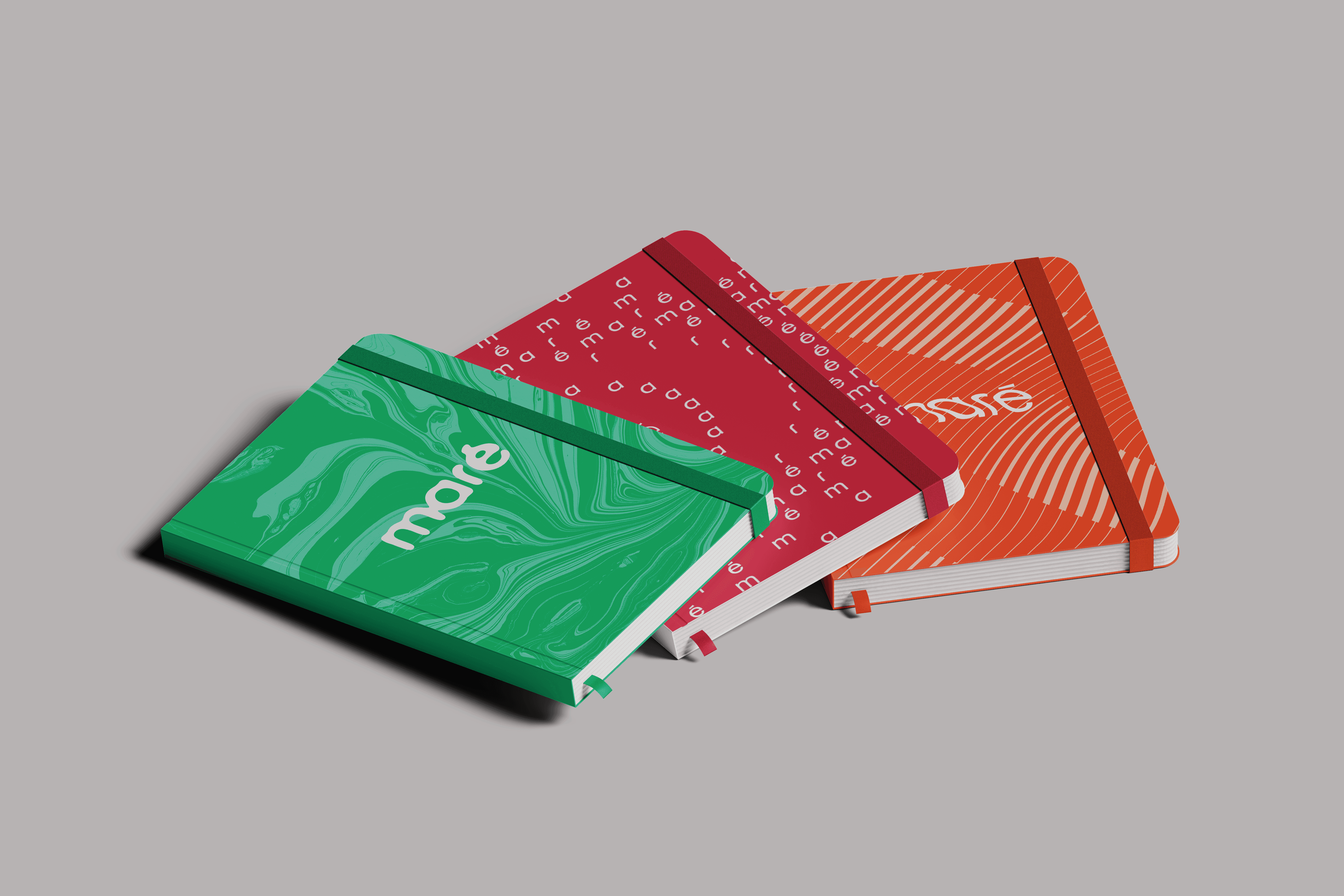
cycle 1 establishes the studio’s origin and tone through fluidity, transformation, and encounter. inspired by marbling on water, the visual language translates movement into organic textures and logo mutations that never repeat, expressing the manifesto as a living statement rather than a static brand message. the system communicates that learning is process: formed by gesture, experimentation, and collective influence.
cycle 1 establishes the studio’s origin and tone through fluidity, transformation, and encounter. inspired by marbling on water, the visual language translates movement into organic textures and logo mutations that never repeat, expressing the manifesto as a living statement rather than a static brand message. the system communicates that learning is process: formed by gesture, experimentation, and collective influence.
cycle 2 — music
cycle 2 — music
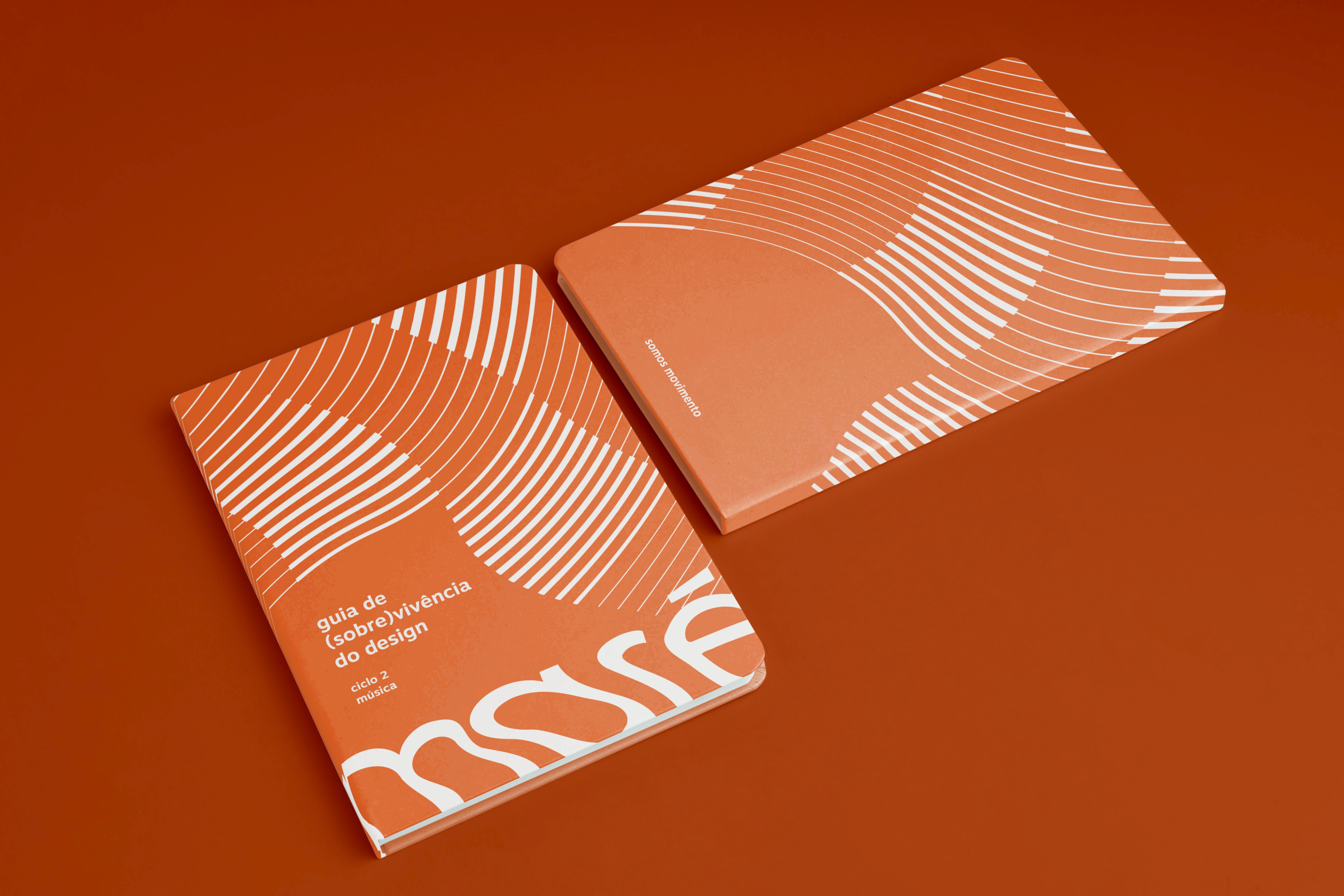
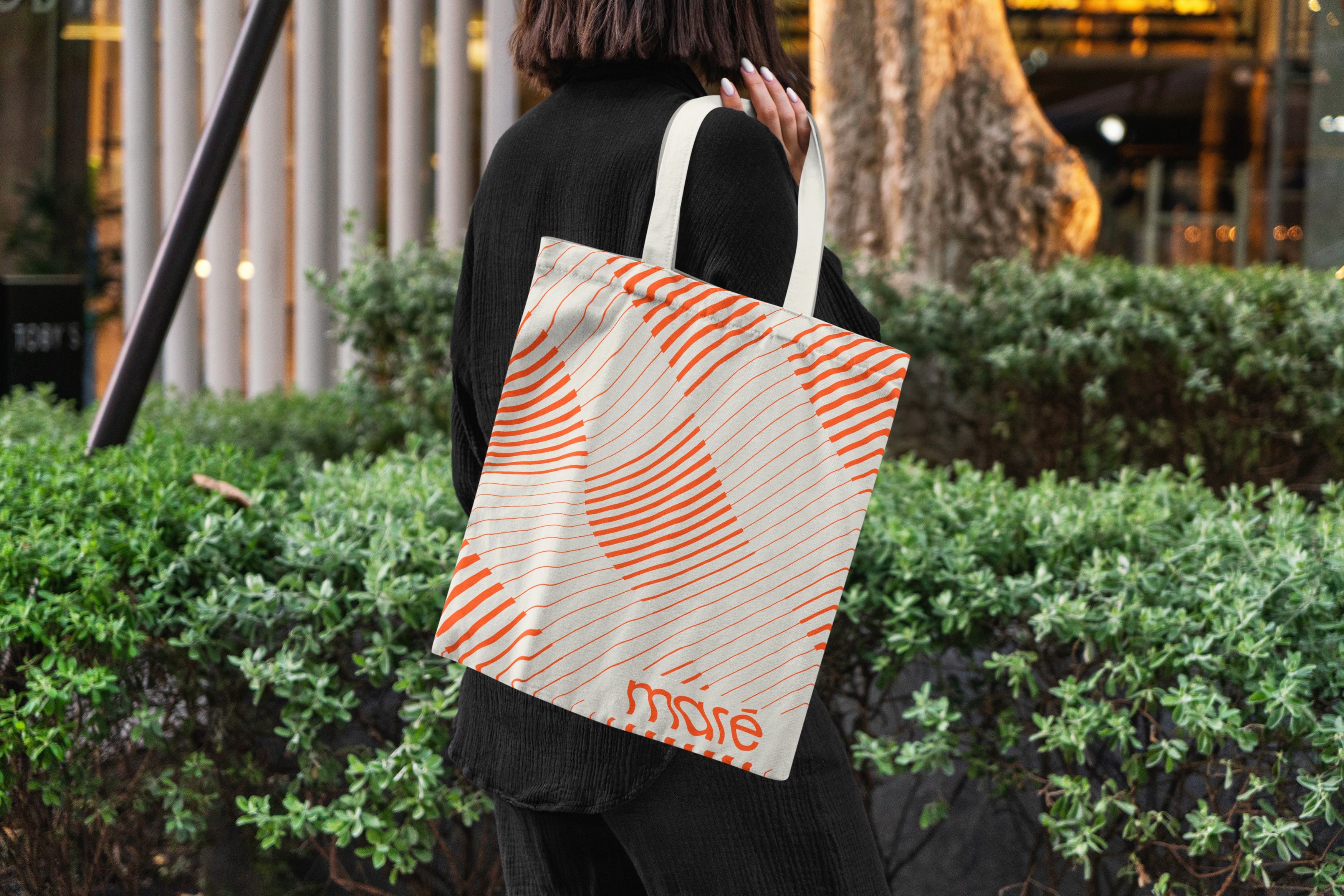
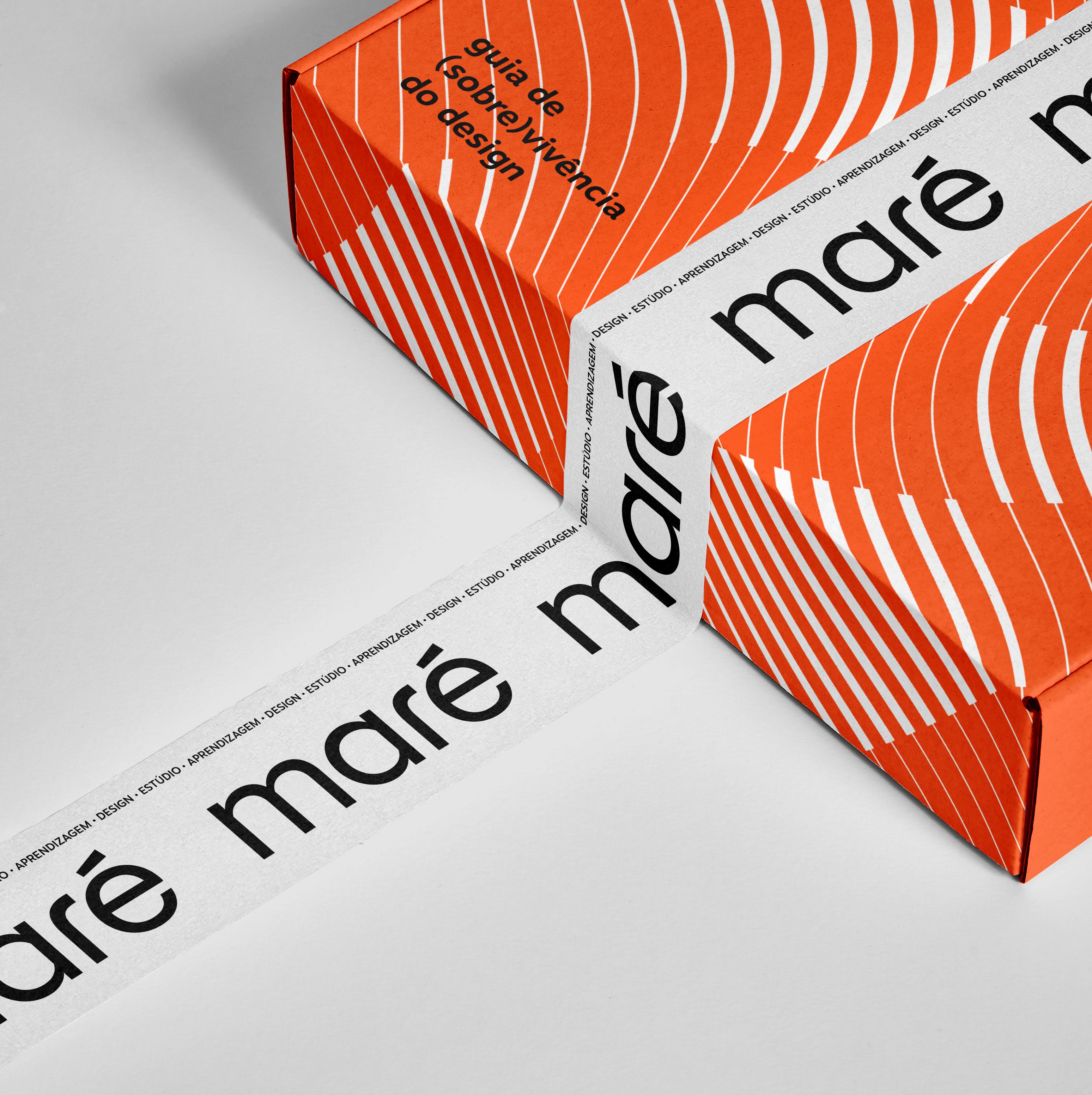
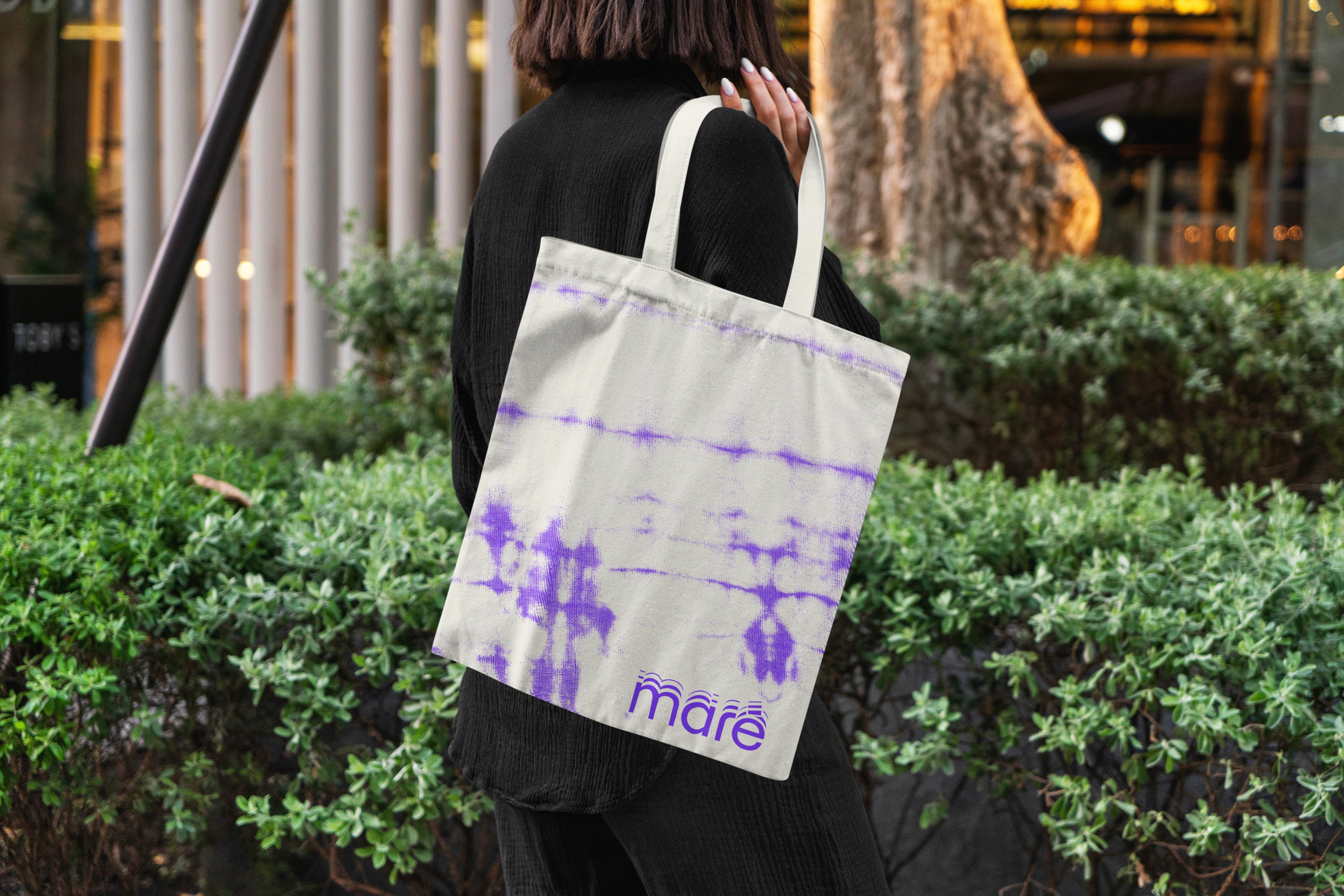
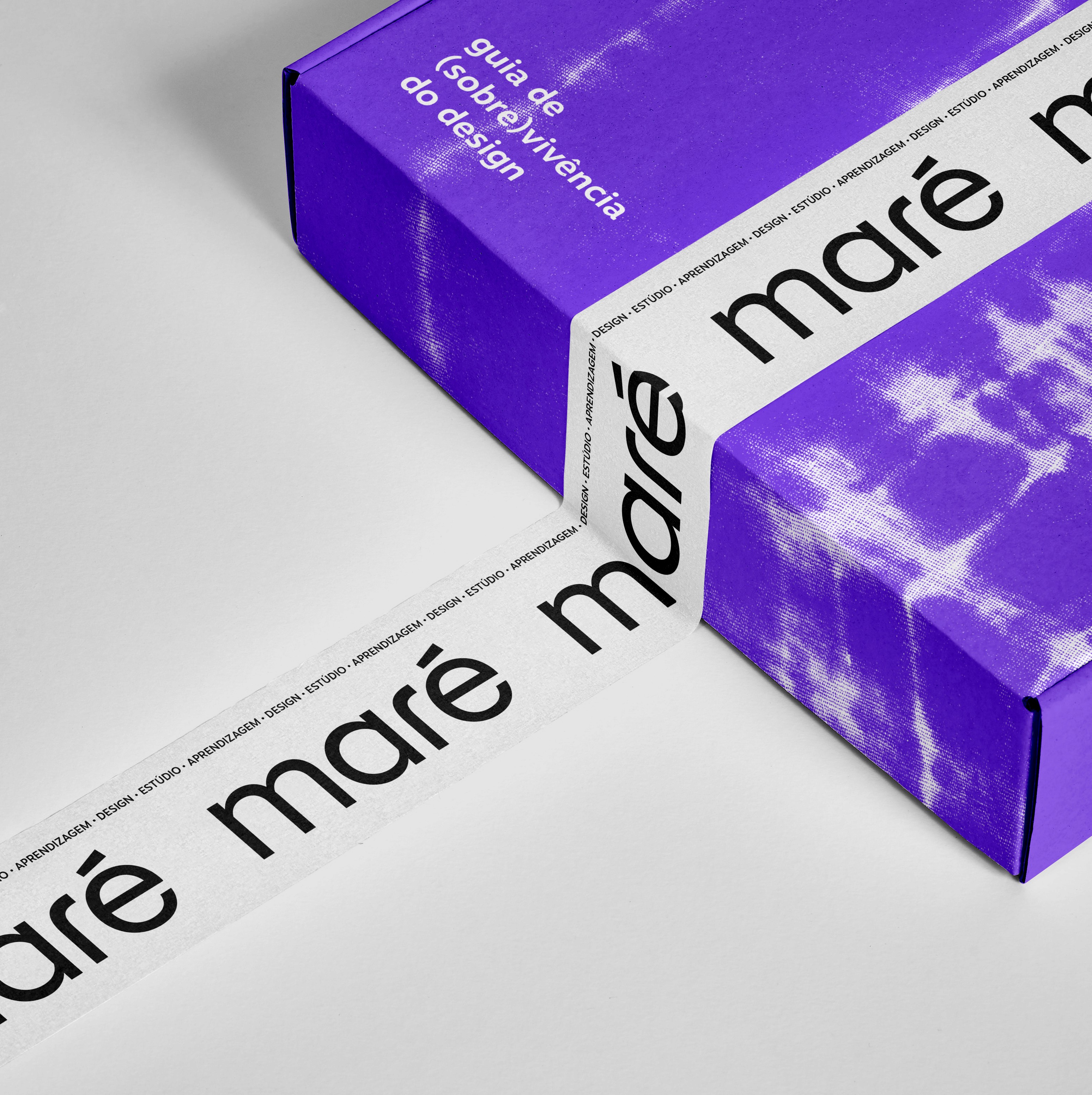
cycle 2 translates sound into form through wave-driven distortions and rhythmic line textures that evoke beats, frequencies, and repetition with variation. the identity behaves like a responsive score: cadence becomes composition, and the logo adapts as if shaped by intensity and tempo. the cycle reinforces learning as collective rhythm — practice happens through exchange, not isolation.
cycle 2 translates sound into form through wave-driven distortions and rhythmic line textures that evoke beats, frequencies, and repetition with variation. the identity behaves like a responsive score: cadence becomes composition, and the logo adapts as if shaped by intensity and tempo. the cycle reinforces learning as collective rhythm — practice happens through exchange, not isolation.
cycle 3 — literature
cycle 3 — literature
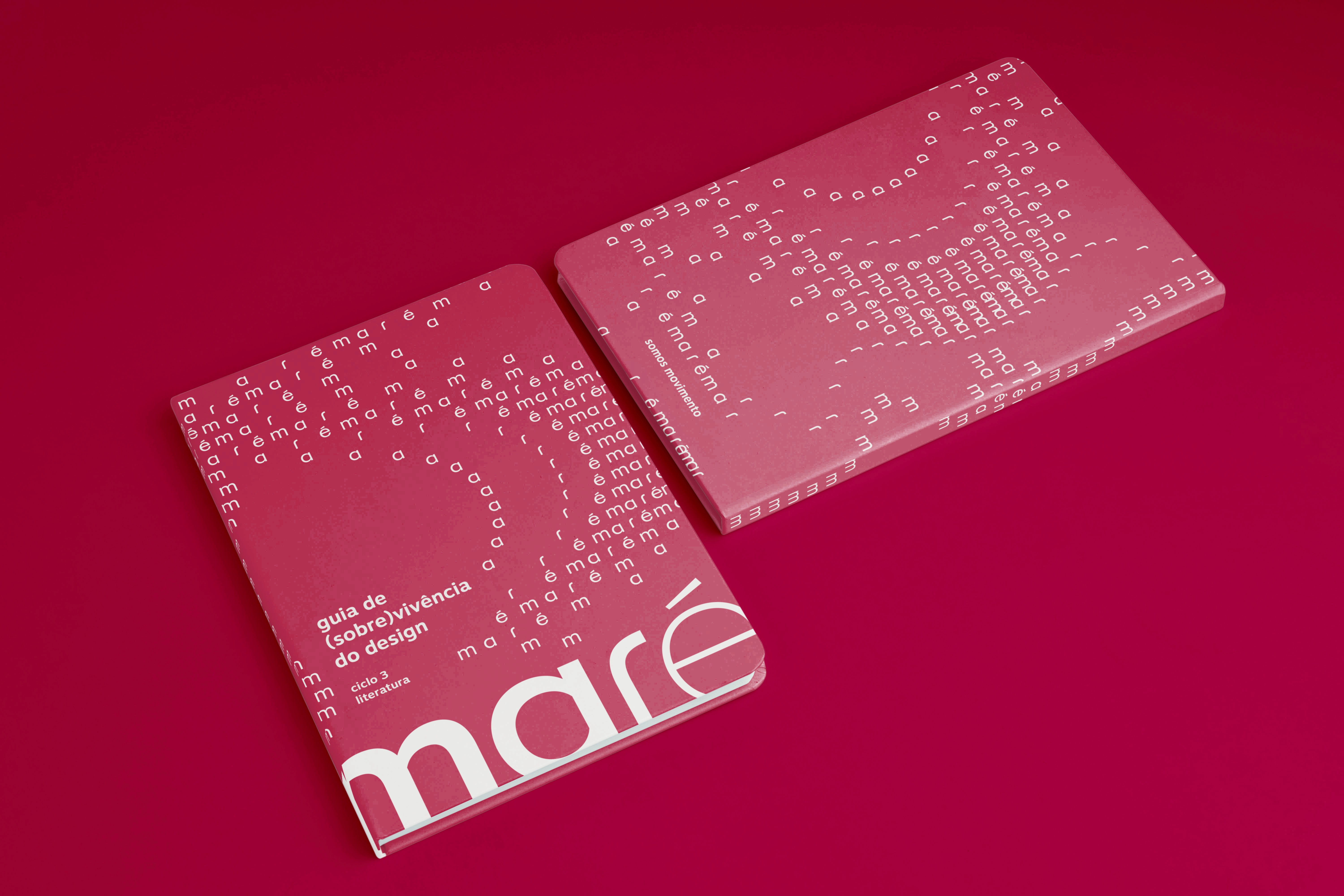
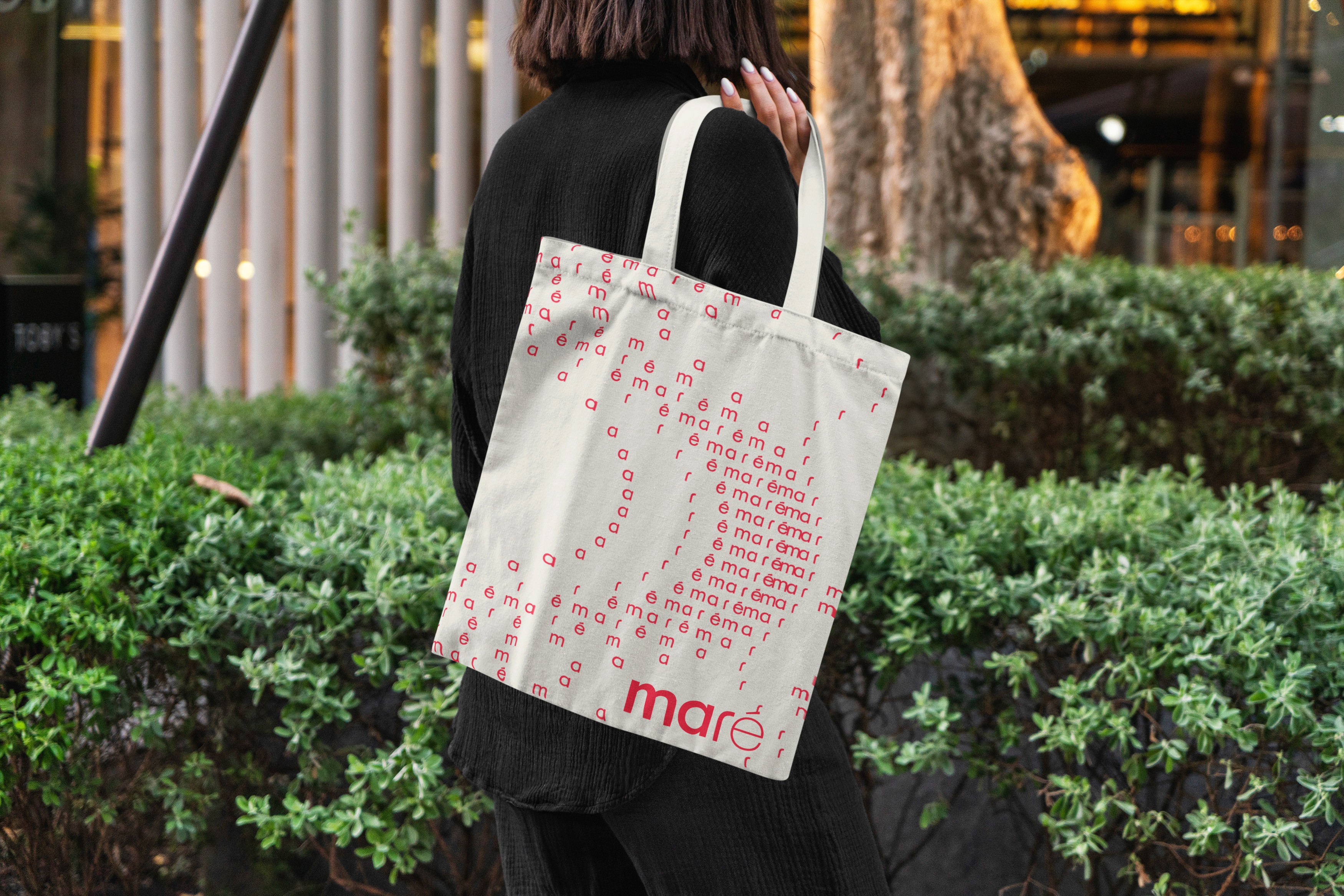
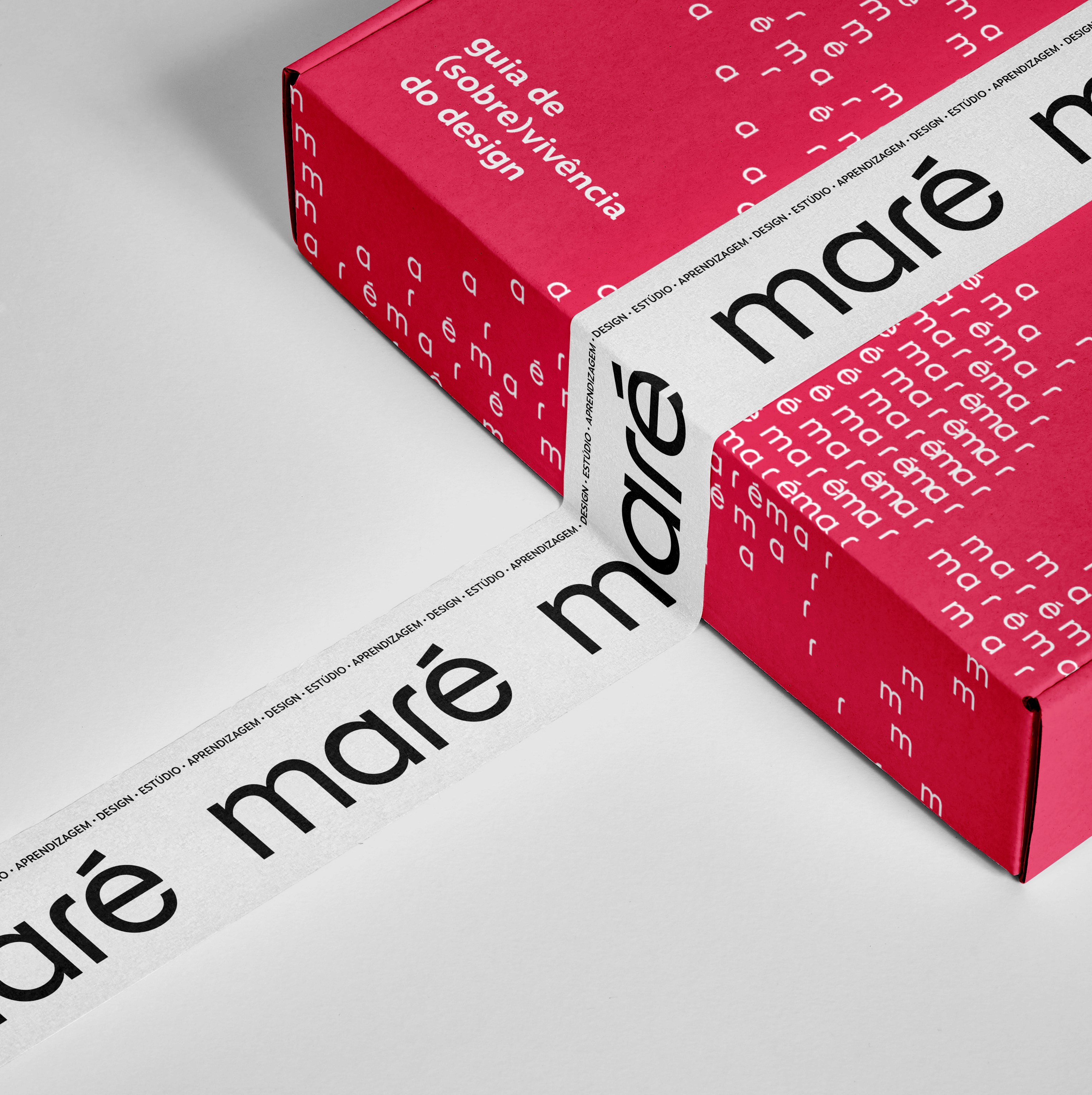
cycle 3 is rooted in typographic experimentation, using cadence, pauses, and repetition as a visual principle. the logo adopts rhythmic typographic contrasts, while textures are built from fragments of type arranged into patterns that treat text as image. this cycle frames interpretation as movement: reading becomes a visual experience, and meaning is built through composition over time.
cycle 3 is rooted in typographic experimentation, using cadence, pauses, and repetition as a visual principle. the logo adopts rhythmic typographic contrasts, while textures are built from fragments of type arranged into patterns that treat text as image. this cycle frames interpretation as movement: reading becomes a visual experience, and meaning is built through composition over time.
cycle 4 — fashion
cycle 4 — fashion
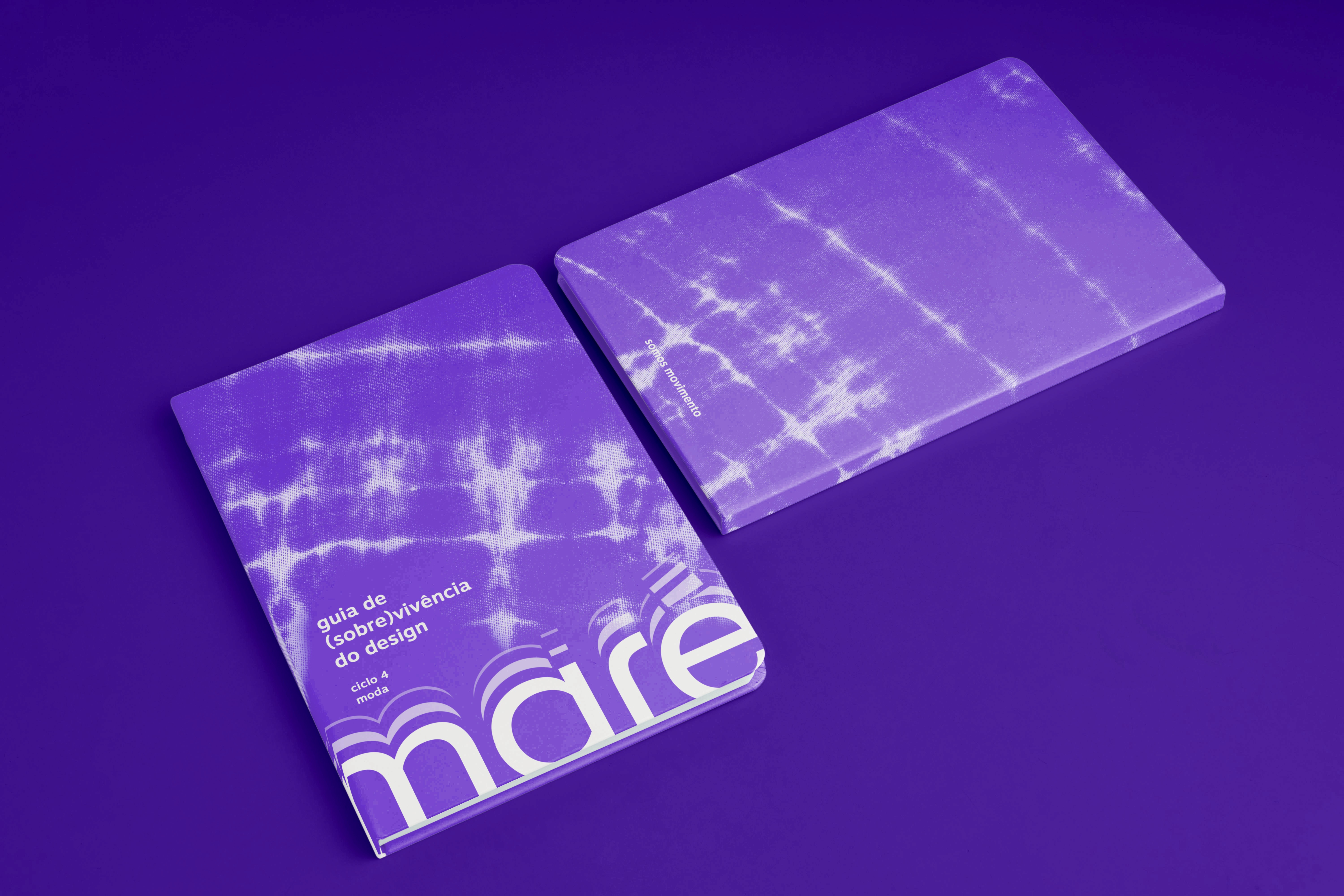
cycle 4 explores layering, folds, and transformation through interference-like textures and wave distortions that echo fabric movement and the symbolic construction of the body. references to artisanal dyeing processes support the idea of uniqueness, unpredictability, and material experimentation. the cycle positions fashion as both visual and political language — a field shaped by time, memory, and collective expression.
cycle 4 explores layering, folds, and transformation through interference-like textures and wave distortions that echo fabric movement and the symbolic construction of the body. references to artisanal dyeing processes support the idea of uniqueness, unpredictability, and material experimentation. the cycle positions fashion as both visual and political language — a field shaped by time, memory, and collective expression.
06
/touchpoints
platform / editorial / community
platform / editorial / community
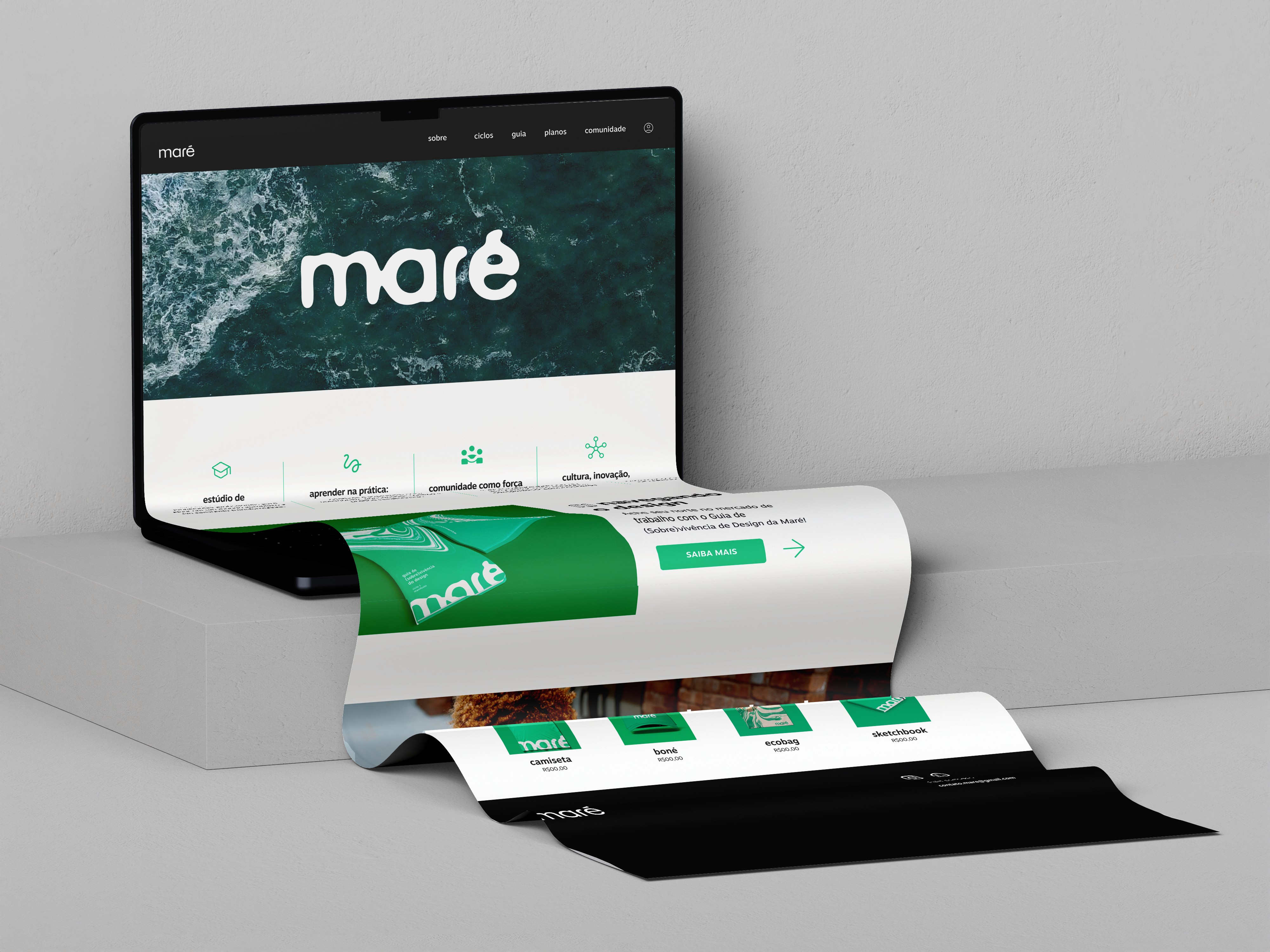
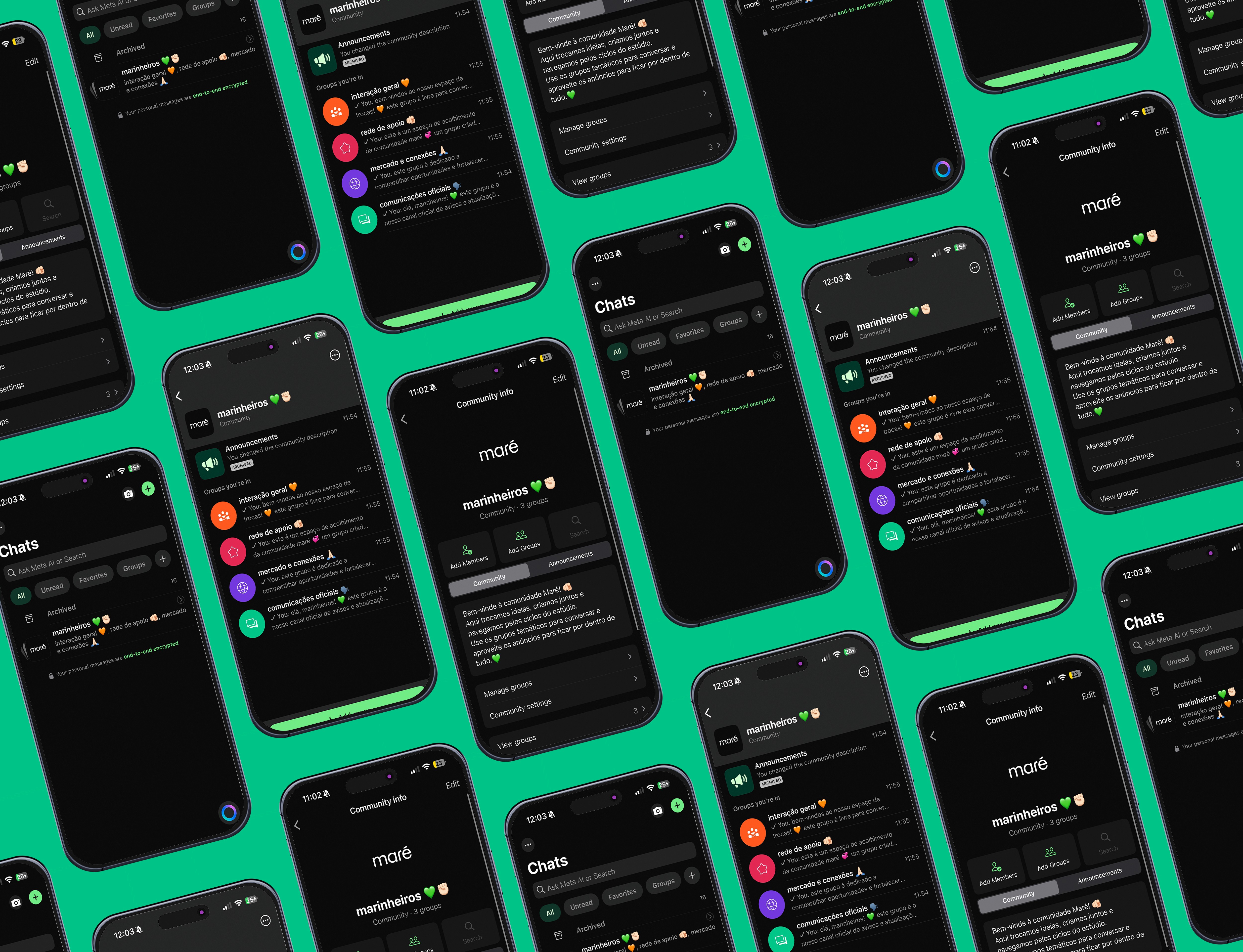
to make the ecosystem tangible, we translated the program and identity into key touchpoints that demonstrate how maré estúdio could operate and scale. the platform acts as the organizing layer: it supports access to cycles, content, community, and continuity between experiences. editorial products function as learning tools and retention assets — designed to turn knowledge into material that can be revisited, shared, and expanded across cycles. community touchpoints (events, talks, workshops, and collaborations) provide intensity and belonging, while partnerships connect learning to real constraints and real audiences. together, these touchpoints prove the studio is not only a concept, but an implementable operating model.
to make the ecosystem tangible, we translated the program and identity into key touchpoints that demonstrate how maré estúdio could operate and scale. the platform acts as the organizing layer: it supports access to cycles, content, community, and continuity between experiences. editorial products function as learning tools and retention assets — designed to turn knowledge into material that can be revisited, shared, and expanded across cycles. community touchpoints (events, talks, workshops, and collaborations) provide intensity and belonging, while partnerships connect learning to real constraints and real audiences. together, these touchpoints prove the studio is not only a concept, but an implementable operating model.
07
/monograph
explore the monograph
explore the monograph
interactive flipbook
interactive flipbook
the brandbook documents macaya’s identity system—concept, visual language, typography, color logic, and core applications—showing how the brand stays consistent across packaging, digital touchpoints, and future extensions.
the brandbook documents macaya’s identity system—concept, visual language, typography, color logic, and core applications—showing how the brand stays consistent across packaging, digital touchpoints, and future extensions.
08
/recognition
recognition
recognition
emilie chamie design award — graduation project winner
emilie chamie design award — graduation project winner
recognized for the creation of a design learning studio and community, developed over 18 months of research, process, and vision.
designing maré estúdio reinforced that education systems are not solved by content alone — they require operating rhythms, community mechanisms, and products that sustain continuity over time. the project also clarified a key tradeoff: flexibility must be designed with rules, otherwise “adaptable” becomes inconsistent. finally, building the studio as a venture (not only a concept) pushed the work beyond aesthetics into viability: defining segments, offers, partnerships, and a program cadence that could realistically be implemented and iterated.
recognized for the creation of a design learning studio and community, developed over 18 months of research, process, and vision.
designing maré estúdio reinforced that education systems are not solved by content alone — they require operating rhythms, community mechanisms, and products that sustain continuity over time. the project also clarified a key tradeoff: flexibility must be designed with rules, otherwise “adaptable” becomes inconsistent. finally, building the studio as a venture (not only a concept) pushed the work beyond aesthetics into viability: defining segments, offers, partnerships, and a program cadence that could realistically be implemented and iterated.

maré estúdio
maré estúdio
maré is a design learning studio and community created as my graduation project (final thesis) at espm são paulo, developed under the entrepreneurship track. built over 18 months of research and prototyping, it proposes a hybrid ecosystem (digital + physical) organized into themed learning cycles that connect students, professionals, and institutions through collective practice, editorial tools, and market-connected experiences.
maré is a design learning studio and community created as my graduation project (final thesis) at espm são paulo, developed under the entrepreneurship track. built over 18 months of research and prototyping, it proposes a hybrid ecosystem (digital + physical) organized into themed learning cycles that connect students, professionals, and institutions through collective practice, editorial tools, and market-connected experiences.
year
2024–2025
2024–2025
duration
18 months
18 months
my role
co-creation across strategy, business model, program design, and brand system
co-creation across strategy, business model, program design, and brand system
team
Fernanda Kuntz, Naiara Terra & Tiago Perotti
Fernanda Kuntz, Naiara Terra & Tiago Perotti
01
/challenge
challenge
challenge
design education in brazil is still largely structured around fragmented, classroom-centered models that struggle to keep pace with a vuca reality. students frequently face discontinuity between theory and practice, limited access to mentorship and community, and few bridges to market experience while still learning. the challenge of the project was to design a viable alternative from scratch: a learning venture capable of expanding education beyond the university, creating continuity over time, and turning learning into a collective practice rooted in brazilian cultural context.
design education in brazil is still largely structured around fragmented, classroom-centered models that struggle to keep pace with a vuca reality. students frequently face discontinuity between theory and practice, limited access to mentorship and community, and few bridges to market experience while still learning. the challenge of the project was to design a viable alternative from scratch: a learning venture capable of expanding education beyond the university, creating continuity over time, and turning learning into a collective practice rooted in brazilian cultural context.
outcome
outcome
maré estúdio was defined as a design learning studio that operates through recurring thematic cycles. each cycle combines community-led learning, practical experimentation, and editorial tools, delivered through a hybrid structure (digital platform + physical experiences). in parallel, we designed a brand system with fixed foundations and variable cycle identities, allowing the studio to remain coherent while constantly changing — matching the project’s core idea: learning as movement, not a static curriculum.
maré estúdio was defined as a design learning studio that operates through recurring thematic cycles. each cycle combines community-led learning, practical experimentation, and editorial tools, delivered through a hybrid structure (digital platform + physical experiences). in parallel, we designed a brand system with fixed foundations and variable cycle identities, allowing the studio to remain coherent while constantly changing — matching the project’s core idea: learning as movement, not a static curriculum.
02
/approach
approach
approach
we used the double diamond as a framework for innovation to structure maré estúdio from exploration to implementation, adapting the Design Council model to a graduation venture context. starting from the challenge, we expanded in discover through field research and ecosystem analysis to understand gaps in brazilian design education; then converged in define by synthesizing insights into a clear problem framing, value proposition, and strategic principles that would guide the studio. from there, we expanded again in develop by designing and testing multiple possibilities for the business and program model — including cycle logic, ecosystem architecture, and offers — and finally converged in deliver by translating the chosen system into concrete prototypes, communication touchpoints, and a flexible identity system that could evolve across cycles.
throughout the process, the double diamond worked less as a linear checklist and more as a decision engine: each phase ended with a tangible output that reduced uncertainty and increased viability. research was not treated as documentation, but as the basis for strategic choices; system design was not treated as a concept, but as an operating model with repeatable cadence; and prototyping served to make the ecosystem legible, scalable, and implementable. in this way, the methodology ensured the project stayed grounded in real constraints while still allowing experimentation, iteration, and expansion across the four cycle identities.
we used the double diamond as a framework for innovation to structure maré estúdio from exploration to implementation, adapting the Design Council model to a graduation venture context. starting from the challenge, we expanded in discover through field research and ecosystem analysis to understand gaps in brazilian design education; then converged in define by synthesizing insights into a clear problem framing, value proposition, and strategic principles that would guide the studio. from there, we expanded again in develop by designing and testing multiple possibilities for the business and program model — including cycle logic, ecosystem architecture, and offers — and finally converged in deliver by translating the chosen system into concrete prototypes, communication touchpoints, and a flexible identity system that could evolve across cycles.
throughout the process, the double diamond worked less as a linear checklist and more as a decision engine: each phase ended with a tangible output that reduced uncertainty and increased viability. research was not treated as documentation, but as the basis for strategic choices; system design was not treated as a concept, but as an operating model with repeatable cadence; and prototyping served to make the ecosystem legible, scalable, and implementable. in this way, the methodology ensured the project stayed grounded in real constraints while still allowing experimentation, iteration, and expansion across the four cycle identities.
03
/brand & identity
brand & identity
brand & identity
the brand strategy positions maré estúdio as a collective movement that transforms the feeling of “drifting” into agency: learning is not passive consumption, but shared practice in constant motion. the identity system mirrors this logic through a stable base and a variable layer. the institutional system anchors recognition through consistent typography, grid discipline, and a core signature, while each cycle introduces a distinct visual language through color, textures, and logo mutations. the result is a brand that stays coherent while remaining alive — designed to evolve with each learning cycle without losing legibility, hierarchy, or recognition.
the brand strategy positions maré estúdio as a collective movement that transforms the feeling of “drifting” into agency: learning is not passive consumption, but shared practice in constant motion. the identity system mirrors this logic through a stable base and a variable layer. the institutional system anchors recognition through consistent typography, grid discipline, and a core signature, while each cycle introduces a distinct visual language through color, textures, and logo mutations. the result is a brand that stays coherent while remaining alive — designed to evolve with each learning cycle without losing legibility, hierarchy, or recognition.
cycles maré
cycles maré
in maré estúdio, cycles are the studio’s core operating unit: a recurring structure that turns learning into rhythm, continuity, and collective momentum rather than isolated experiences. each cycle is built around a cultural theme that works as both curriculum lens and creative constraint, guiding the selection of talks, workshops, labs, and editorial outputs. this format makes the ecosystem scalable and repeatable while staying open to change: the program evolves cycle by cycle, the community renews itself through shared focus, and the brand system adapts visually to reflect each cycle’s theme without losing its institutional coherence.
in maré estúdio, cycles are the studio’s core operating unit: a recurring structure that turns learning into rhythm, continuity, and collective momentum rather than isolated experiences. each cycle is built around a cultural theme that works as both curriculum lens and creative constraint, guiding the selection of talks, workshops, labs, and editorial outputs. this format makes the ecosystem scalable and repeatable while staying open to change: the program evolves cycle by cycle, the community renews itself through shared focus, and the brand system adapts visually to reflect each cycle’s theme without losing its institutional coherence.
cycle 1 — manifest
cycle 1 — manifest
cycle 2 — music
cycle 2 — music
cycle 3 — literature
cycle 3 — literature
cycle 4 — fashion
cycle 4 — fashion
cycle 1 — manifest
cycle 1 — manifest
cycle 1 establishes the studio’s origin and tone through fluidity, transformation, and encounter. inspired by marbling on water, the visual language translates movement into organic textures and logo mutations that never repeat, expressing the manifesto as a living statement rather than a static brand message. the system communicates that learning is process: formed by gesture, experimentation, and collective influence.
cycle 1 establishes the studio’s origin and tone through fluidity, transformation, and encounter. inspired by marbling on water, the visual language translates movement into organic textures and logo mutations that never repeat, expressing the manifesto as a living statement rather than a static brand message. the system communicates that learning is process: formed by gesture, experimentation, and collective influence.
cycle 2 — music
cycle 2 — music
cycle 2 translates sound into form through wave-driven distortions and rhythmic line textures that evoke beats, frequencies, and repetition with variation. the identity behaves like a responsive score: cadence becomes composition, and the logo adapts as if shaped by intensity and tempo. the cycle reinforces learning as collective rhythm — practice happens through exchange, not isolation.
cycle 2 translates sound into form through wave-driven distortions and rhythmic line textures that evoke beats, frequencies, and repetition with variation. the identity behaves like a responsive score: cadence becomes composition, and the logo adapts as if shaped by intensity and tempo. the cycle reinforces learning as collective rhythm — practice happens through exchange, not isolation.
cycle 3 — literature
cycle 3 — literature
cycle 3 is rooted in typographic experimentation, using cadence, pauses, and repetition as a visual principle. the logo adopts rhythmic typographic contrasts, while textures are built from fragments of type arranged into patterns that treat text as image. this cycle frames interpretation as movement: reading becomes a visual experience, and meaning is built through composition over time.
cycle 3 is rooted in typographic experimentation, using cadence, pauses, and repetition as a visual principle. the logo adopts rhythmic typographic contrasts, while textures are built from fragments of type arranged into patterns that treat text as image. this cycle frames interpretation as movement: reading becomes a visual experience, and meaning is built through composition over time.
cycle 4 — fashion
cycle 4 — fashion
cycle 4 explores layering, folds, and transformation through interference-like textures and wave distortions that echo fabric movement and the symbolic construction of the body. references to artisanal dyeing processes support the idea of uniqueness, unpredictability, and material experimentation. the cycle positions fashion as both visual and political language — a field shaped by time, memory, and collective expression.
cycle 4 explores layering, folds, and transformation through interference-like textures and wave distortions that echo fabric movement and the symbolic construction of the body. references to artisanal dyeing processes support the idea of uniqueness, unpredictability, and material experimentation. the cycle positions fashion as both visual and political language — a field shaped by time, memory, and collective expression.
06
/touchpoints
platform / editorial / community
platform / editorial / community
to make the ecosystem tangible, we translated the program and identity into key touchpoints that demonstrate how maré estúdio could operate and scale. the platform acts as the organizing layer: it supports access to cycles, content, community, and continuity between experiences. editorial products function as learning tools and retention assets — designed to turn knowledge into material that can be revisited, shared, and expanded across cycles. community touchpoints (events, talks, workshops, and collaborations) provide intensity and belonging, while partnerships connect learning to real constraints and real audiences. together, these touchpoints prove the studio is not only a concept, but an implementable operating model.
to make the ecosystem tangible, we translated the program and identity into key touchpoints that demonstrate how maré estúdio could operate and scale. the platform acts as the organizing layer: it supports access to cycles, content, community, and continuity between experiences. editorial products function as learning tools and retention assets — designed to turn knowledge into material that can be revisited, shared, and expanded across cycles. community touchpoints (events, talks, workshops, and collaborations) provide intensity and belonging, while partnerships connect learning to real constraints and real audiences. together, these touchpoints prove the studio is not only a concept, but an implementable operating model.
07
/monograph
explore the monograph
explore the monograph
interactive flipbook
interactive flipbook
the brandbook documents macaya’s identity system—concept, visual language, typography, color logic, and core applications—showing how the brand stays consistent across packaging, digital touchpoints, and future extensions.
the brandbook documents macaya’s identity system—concept, visual language, typography, color logic, and core applications—showing how the brand stays consistent across packaging, digital touchpoints, and future extensions.
08
/recognition
recognition
recognition
emilie chamie design award — graduation project winner
emilie chamie design award — graduation project winner
recognized for the creation of a design learning studio and community, developed over 18 months of research, process, and vision.
designing maré estúdio reinforced that education systems are not solved by content alone — they require operating rhythms, community mechanisms, and products that sustain continuity over time. the project also clarified a key tradeoff: flexibility must be designed with rules, otherwise “adaptable” becomes inconsistent. finally, building the studio as a venture (not only a concept) pushed the work beyond aesthetics into viability: defining segments, offers, partnerships, and a program cadence that could realistically be implemented and iterated.
recognized for the creation of a design learning studio and community, developed over 18 months of research, process, and vision.
designing maré estúdio reinforced that education systems are not solved by content alone — they require operating rhythms, community mechanisms, and products that sustain continuity over time. the project also clarified a key tradeoff: flexibility must be designed with rules, otherwise “adaptable” becomes inconsistent. finally, building the studio as a venture (not only a concept) pushed the work beyond aesthetics into viability: defining segments, offers, partnerships, and a program cadence that could realistically be implemented and iterated.
maré estúdio
maré estúdio
maré is a design learning studio and community created as my graduation project (final thesis) at espm são paulo, developed under the entrepreneurship track. built over 18 months of research and prototyping, it proposes a hybrid ecosystem (digital + physical) organized into themed learning cycles that connect students, professionals, and institutions through collective practice, editorial tools, and market-connected experiences.
maré is a design learning studio and community created as my graduation project (final thesis) at espm são paulo, developed under the entrepreneurship track. built over 18 months of research and prototyping, it proposes a hybrid ecosystem (digital + physical) organized into themed learning cycles that connect students, professionals, and institutions through collective practice, editorial tools, and market-connected experiences.
year
2024–2025
2024–2025
duration
18 months
18 months
my role
co-creation across strategy, business model, program design, and brand system
co-creation across strategy, business model, program design, and brand system
team
Fernanda Kuntz, Naiara Terra & Tiago Perotti
Fernanda Kuntz, Naiara Terra & Tiago Perotti
01
/challenge
challenge
challenge
design education in brazil is still largely structured around fragmented, classroom-centered models that struggle to keep pace with a vuca reality. students frequently face discontinuity between theory and practice, limited access to mentorship and community, and few bridges to market experience while still learning. the challenge of the project was to design a viable alternative from scratch: a learning venture capable of expanding education beyond the university, creating continuity over time, and turning learning into a collective practice rooted in brazilian cultural context.
design education in brazil is still largely structured around fragmented, classroom-centered models that struggle to keep pace with a vuca reality. students frequently face discontinuity between theory and practice, limited access to mentorship and community, and few bridges to market experience while still learning. the challenge of the project was to design a viable alternative from scratch: a learning venture capable of expanding education beyond the university, creating continuity over time, and turning learning into a collective practice rooted in brazilian cultural context.
outcome
outcome
maré estúdio was defined as a design learning studio that operates through recurring thematic cycles. each cycle combines community-led learning, practical experimentation, and editorial tools, delivered through a hybrid structure (digital platform + physical experiences). in parallel, we designed a brand system with fixed foundations and variable cycle identities, allowing the studio to remain coherent while constantly changing — matching the project’s core idea: learning as movement, not a static curriculum.
maré estúdio was defined as a design learning studio that operates through recurring thematic cycles. each cycle combines community-led learning, practical experimentation, and editorial tools, delivered through a hybrid structure (digital platform + physical experiences). in parallel, we designed a brand system with fixed foundations and variable cycle identities, allowing the studio to remain coherent while constantly changing — matching the project’s core idea: learning as movement, not a static curriculum.
02
/approach
approach
approach
we used the double diamond as a framework for innovation to structure maré estúdio from exploration to implementation, adapting the Design Council model to a graduation venture context. starting from the challenge, we expanded in discover through field research and ecosystem analysis to understand gaps in brazilian design education; then converged in define by synthesizing insights into a clear problem framing, value proposition, and strategic principles that would guide the studio. from there, we expanded again in develop by designing and testing multiple possibilities for the business and program model — including cycle logic, ecosystem architecture, and offers — and finally converged in deliver by translating the chosen system into concrete prototypes, communication touchpoints, and a flexible identity system that could evolve across cycles.
throughout the process, the double diamond worked less as a linear checklist and more as a decision engine: each phase ended with a tangible output that reduced uncertainty and increased viability. research was not treated as documentation, but as the basis for strategic choices; system design was not treated as a concept, but as an operating model with repeatable cadence; and prototyping served to make the ecosystem legible, scalable, and implementable. in this way, the methodology ensured the project stayed grounded in real constraints while still allowing experimentation, iteration, and expansion across the four cycle identities.
we used the double diamond as a framework for innovation to structure maré estúdio from exploration to implementation, adapting the Design Council model to a graduation venture context. starting from the challenge, we expanded in discover through field research and ecosystem analysis to understand gaps in brazilian design education; then converged in define by synthesizing insights into a clear problem framing, value proposition, and strategic principles that would guide the studio. from there, we expanded again in develop by designing and testing multiple possibilities for the business and program model — including cycle logic, ecosystem architecture, and offers — and finally converged in deliver by translating the chosen system into concrete prototypes, communication touchpoints, and a flexible identity system that could evolve across cycles.
throughout the process, the double diamond worked less as a linear checklist and more as a decision engine: each phase ended with a tangible output that reduced uncertainty and increased viability. research was not treated as documentation, but as the basis for strategic choices; system design was not treated as a concept, but as an operating model with repeatable cadence; and prototyping served to make the ecosystem legible, scalable, and implementable. in this way, the methodology ensured the project stayed grounded in real constraints while still allowing experimentation, iteration, and expansion across the four cycle identities.
03
/brand & identity
brand & identity
brand & identity
the brand strategy positions maré estúdio as a collective movement that transforms the feeling of “drifting” into agency: learning is not passive consumption, but shared practice in constant motion. the identity system mirrors this logic through a stable base and a variable layer. the institutional system anchors recognition through consistent typography, grid discipline, and a core signature, while each cycle introduces a distinct visual language through color, textures, and logo mutations. the result is a brand that stays coherent while remaining alive — designed to evolve with each learning cycle without losing legibility, hierarchy, or recognition.
the brand strategy positions maré estúdio as a collective movement that transforms the feeling of “drifting” into agency: learning is not passive consumption, but shared practice in constant motion. the identity system mirrors this logic through a stable base and a variable layer. the institutional system anchors recognition through consistent typography, grid discipline, and a core signature, while each cycle introduces a distinct visual language through color, textures, and logo mutations. the result is a brand that stays coherent while remaining alive — designed to evolve with each learning cycle without losing legibility, hierarchy, or recognition.
cycles maré
cycles maré
in maré estúdio, cycles are the studio’s core operating unit: a recurring structure that turns learning into rhythm, continuity, and collective momentum rather than isolated experiences. each cycle is built around a cultural theme that works as both curriculum lens and creative constraint, guiding the selection of talks, workshops, labs, and editorial outputs. this format makes the ecosystem scalable and repeatable while staying open to change: the program evolves cycle by cycle, the community renews itself through shared focus, and the brand system adapts visually to reflect each cycle’s theme without losing its institutional coherence.
in maré estúdio, cycles are the studio’s core operating unit: a recurring structure that turns learning into rhythm, continuity, and collective momentum rather than isolated experiences. each cycle is built around a cultural theme that works as both curriculum lens and creative constraint, guiding the selection of talks, workshops, labs, and editorial outputs. this format makes the ecosystem scalable and repeatable while staying open to change: the program evolves cycle by cycle, the community renews itself through shared focus, and the brand system adapts visually to reflect each cycle’s theme without losing its institutional coherence.
cycle 1 — manifest
cycle 1 — manifest
cycle 2 — music
cycle 2 — music
cycle 3 — literature
cycle 3 — literature
cycle 4 — fashion
cycle 4 — fashion
cycle 1 — manifest
cycle 1 — manifest
cycle 1 establishes the studio’s origin and tone through fluidity, transformation, and encounter. inspired by marbling on water, the visual language translates movement into organic textures and logo mutations that never repeat, expressing the manifesto as a living statement rather than a static brand message. the system communicates that learning is process: formed by gesture, experimentation, and collective influence.
cycle 1 establishes the studio’s origin and tone through fluidity, transformation, and encounter. inspired by marbling on water, the visual language translates movement into organic textures and logo mutations that never repeat, expressing the manifesto as a living statement rather than a static brand message. the system communicates that learning is process: formed by gesture, experimentation, and collective influence.
cycle 2 — music
cycle 2 — music
cycle 2 translates sound into form through wave-driven distortions and rhythmic line textures that evoke beats, frequencies, and repetition with variation. the identity behaves like a responsive score: cadence becomes composition, and the logo adapts as if shaped by intensity and tempo. the cycle reinforces learning as collective rhythm — practice happens through exchange, not isolation.
cycle 2 translates sound into form through wave-driven distortions and rhythmic line textures that evoke beats, frequencies, and repetition with variation. the identity behaves like a responsive score: cadence becomes composition, and the logo adapts as if shaped by intensity and tempo. the cycle reinforces learning as collective rhythm — practice happens through exchange, not isolation.
cycle 3 — literature
cycle 3 — literature
cycle 3 is rooted in typographic experimentation, using cadence, pauses, and repetition as a visual principle. the logo adopts rhythmic typographic contrasts, while textures are built from fragments of type arranged into patterns that treat text as image. this cycle frames interpretation as movement: reading becomes a visual experience, and meaning is built through composition over time.
cycle 3 is rooted in typographic experimentation, using cadence, pauses, and repetition as a visual principle. the logo adopts rhythmic typographic contrasts, while textures are built from fragments of type arranged into patterns that treat text as image. this cycle frames interpretation as movement: reading becomes a visual experience, and meaning is built through composition over time.
cycle 4 — fashion
cycle 4 — fashion
cycle 4 explores layering, folds, and transformation through interference-like textures and wave distortions that echo fabric movement and the symbolic construction of the body. references to artisanal dyeing processes support the idea of uniqueness, unpredictability, and material experimentation. the cycle positions fashion as both visual and political language — a field shaped by time, memory, and collective expression.
cycle 4 explores layering, folds, and transformation through interference-like textures and wave distortions that echo fabric movement and the symbolic construction of the body. references to artisanal dyeing processes support the idea of uniqueness, unpredictability, and material experimentation. the cycle positions fashion as both visual and political language — a field shaped by time, memory, and collective expression.
06
/touchpoints
platform / editorial / community
platform / editorial / community
to make the ecosystem tangible, we translated the program and identity into key touchpoints that demonstrate how maré estúdio could operate and scale. the platform acts as the organizing layer: it supports access to cycles, content, community, and continuity between experiences. editorial products function as learning tools and retention assets — designed to turn knowledge into material that can be revisited, shared, and expanded across cycles. community touchpoints (events, talks, workshops, and collaborations) provide intensity and belonging, while partnerships connect learning to real constraints and real audiences. together, these touchpoints prove the studio is not only a concept, but an implementable operating model.
to make the ecosystem tangible, we translated the program and identity into key touchpoints that demonstrate how maré estúdio could operate and scale. the platform acts as the organizing layer: it supports access to cycles, content, community, and continuity between experiences. editorial products function as learning tools and retention assets — designed to turn knowledge into material that can be revisited, shared, and expanded across cycles. community touchpoints (events, talks, workshops, and collaborations) provide intensity and belonging, while partnerships connect learning to real constraints and real audiences. together, these touchpoints prove the studio is not only a concept, but an implementable operating model.
07
/monograph
explore the monograph
explore the monograph
interactive flipbook
interactive flipbook
the brandbook documents macaya’s identity system—concept, visual language, typography, color logic, and core applications—showing how the brand stays consistent across packaging, digital touchpoints, and future extensions.
the brandbook documents macaya’s identity system—concept, visual language, typography, color logic, and core applications—showing how the brand stays consistent across packaging, digital touchpoints, and future extensions.
08
/recognition
recognition
recognition
emilie chamie design award — graduation project winner
emilie chamie design award — graduation project winner
recognized for the creation of a design learning studio and community, developed over 18 months of research, process, and vision.
designing maré estúdio reinforced that education systems are not solved by content alone — they require operating rhythms, community mechanisms, and products that sustain continuity over time. the project also clarified a key tradeoff: flexibility must be designed with rules, otherwise “adaptable” becomes inconsistent. finally, building the studio as a venture (not only a concept) pushed the work beyond aesthetics into viability: defining segments, offers, partnerships, and a program cadence that could realistically be implemented and iterated.
recognized for the creation of a design learning studio and community, developed over 18 months of research, process, and vision.
designing maré estúdio reinforced that education systems are not solved by content alone — they require operating rhythms, community mechanisms, and products that sustain continuity over time. the project also clarified a key tradeoff: flexibility must be designed with rules, otherwise “adaptable” becomes inconsistent. finally, building the studio as a venture (not only a concept) pushed the work beyond aesthetics into viability: defining segments, offers, partnerships, and a program cadence that could realistically be implemented and iterated.